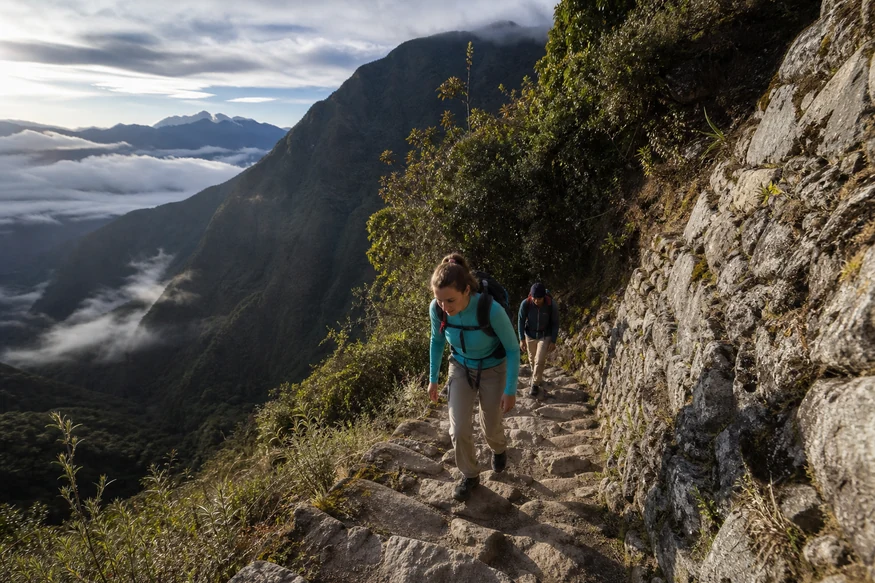
How difficult is the Inca Trail? For most reasonably active travelers, the Classic Inca Trail is a moderate-to-challenging multi-day trek. It does not require technical climbing, but the combination of high altitude, long stone staircases, sustained climbs and several consecutive hiking days makes it more demanding than its distance alone suggests.
The hardest part is different for every traveler. Some feel the altitude most strongly, others find the ascent to Dead Woman's Pass difficult, and many are surprised by the long descents on uneven stone steps. Understanding those challenges before booking helps you prepare realistically without treating the trek as an extreme expedition.
| Factor | What to Expect | Difficulty Impact |
|---|---|---|
| Altitude | The route reaches approximately 4,215 m at Dead Woman's Pass | High |
| Terrain | Original stone paths, steep stairs and uneven descents | Moderate to high |
| Duration | Several hours of hiking on consecutive days | Moderate |
| Technical skill | No ropes or climbing experience required | Low |
| Weather | Sun, cold, wind or rain depending on season | Variable |
The Classic route is often described as roughly 43 kilometers, but distance is only one part of the challenge. A flat 43-kilometer walk at sea level is very different from repeated climbing and descending above 3,000 meters. The trail includes thousands of irregular steps built into steep Andean terrain.
You also need to walk again the following morning. Multi-day endurance and recovery matter more than being able to complete one hard workout.
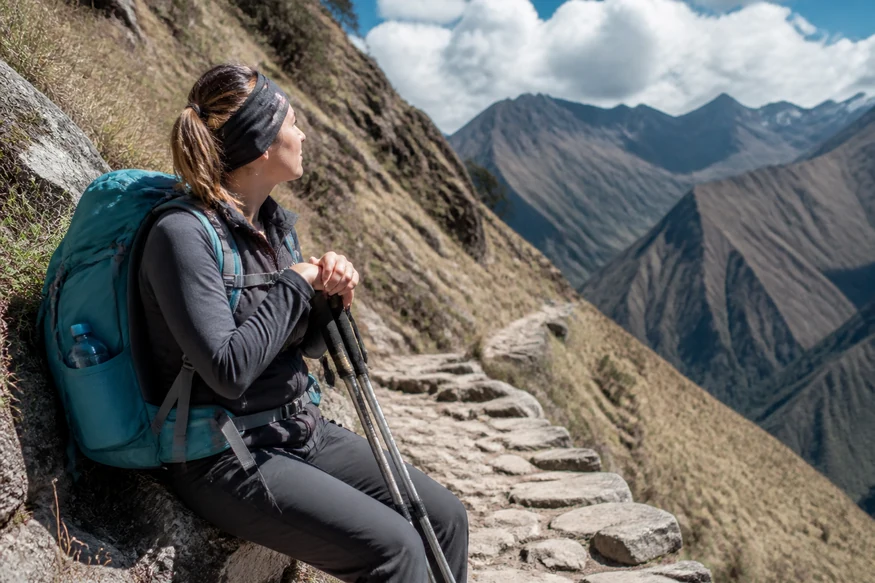
Altitude is frequently the most unpredictable factor. Fitness helps you move efficiently, but it does not guarantee that you will avoid altitude symptoms. The trail's highest point, Dead Woman's Pass, sits at approximately 4,215 meters.
Arriving in Cusco immediately before the trek gives your body little time to adapt. Most itineraries work better when travelers allow time in Cusco or the Sacred Valley beforehand. Review our detailed guide to Inca Trail altitude when planning your acclimatization.
The climb to Dead Woman's Pass is generally considered the most demanding ascent on the Classic Inca Trail. It is long, exposed and completed in thinner air. The correct strategy is a slow, sustainable pace rather than trying to keep up with the fastest person in the group.
The pass is not technically difficult. There is no climbing equipment involved, but the sustained uphill effort can be tiring even for experienced hikers.
Many travelers focus entirely on climbing and are surprised by the downhill sections. Descending irregular stone stairs places repeated load on the quadriceps and knees. Wet stones can also require more deliberate foot placement.
Training on stairs and hills in both directions is more useful than preparing only with flat walking. Trekking poles with protective rubber tips may improve stability when used according to current trail rules.
On the standard four-day itinerary, the second day is usually regarded as the hardest because it includes the climb toward Dead Woman's Pass and substantial elevation change. Exact campsites and daily distances vary by operator, so ask for the specific itinerary rather than relying on a generic schedule.
The third day can also be demanding because of its long stone descents, even when the overall profile appears easier.
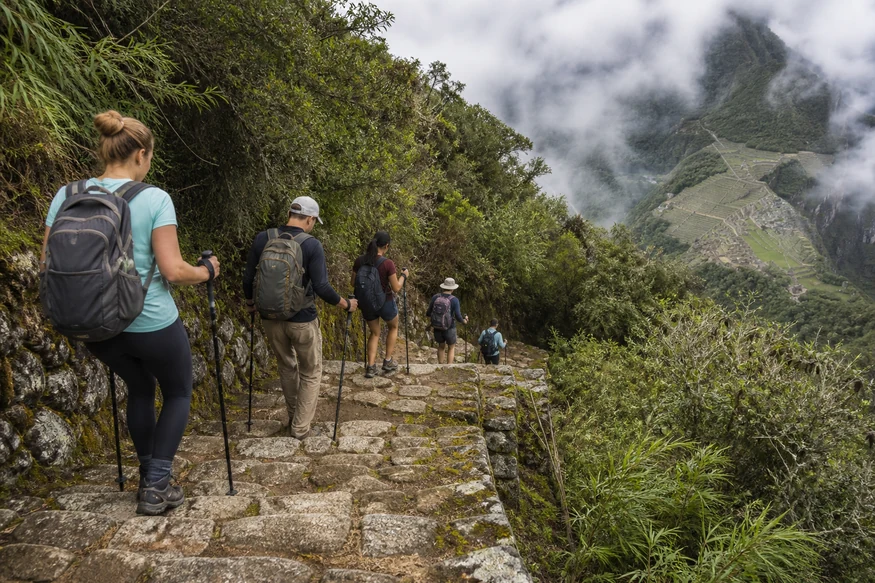
You do not need to be an elite athlete. A practical benchmark is being comfortable walking for several hours on hilly terrain and being able to repeat a moderate effort the following day.
Useful preparation includes regular cardio, leg strength, stairs, longer weekend walks and some back-to-back active days. Our guide to how to prepare for the Inca Trail provides a structured approach.
Yes. Many first-time multi-day trekkers complete the route successfully when they train consistently, acclimatize and choose an itinerary suited to their pace. Beginners should be honest about current activity levels and start preparing well before departure.
A shorter route may be more appropriate for travelers who want the historic approach to Machu Picchu without the highest pass or several nights of camping. Compare the options in our guide to the 2-Day vs 4-Day Inca Trail.
Porters make the expedition more manageable by transporting group camping equipment and, depending on the service booked, some personal items. However, every traveler still walks the route and carries immediate essentials in a daypack.
Porter support reduces load; it does not remove altitude, stairs or distance. Learn what is normally carried in our guide to Inca Trail porters.
Dry conditions usually provide firmer footing, but sunny days can increase heat and exposure while nights remain cold. Rain can make stone stairs slippery and increases the importance of waterproof layers and careful movement.
Check the best time to hike the Inca Trail and use the appropriate monthly guide for your intended travel dates.
A lighter daypack generally makes the climb more comfortable. Carry water, rain protection, a warm layer, sun protection, medication, identification and other items you may need while walking.
Avoid packing for every imaginable scenario. Use our practical Inca Trail packing list and confirm what your operator supplies.
Travelers with heart, respiratory, mobility or other relevant health conditions should seek individualized medical advice before committing to a high-altitude multi-day trek. Online difficulty ratings cannot account for personal medical history.
No. It is a trekking route rather than a technical climb, but altitude and steep terrain make it physically demanding.
Previous hiking experience is helpful but not mandatory. Consistent preparation and realistic expectations are more important.
Gym training can build fitness, but outdoor walks, hills and stairs better prepare your feet and legs for uneven terrain.
Generally yes, because it avoids the highest pass and multi-day camping, although its main hiking day still includes sustained uphill walking and stone stairs.
The Inca Trail is challenging enough to require preparation but achievable for many travelers. Its difficulty comes from the combined effect of altitude, stairs, elevation change and consecutive days—not from technical climbing. Train steadily, acclimatize and select the right route so the trek remains demanding for the right reasons and enjoyable from start to finish.
If you want the complete route with a more personalized level of service, compare our luxury four-day Inca Trail experience. Travelers who prefer to avoid the highest pass and multi-night camping can consider the Short Inca Trail 2 Days.