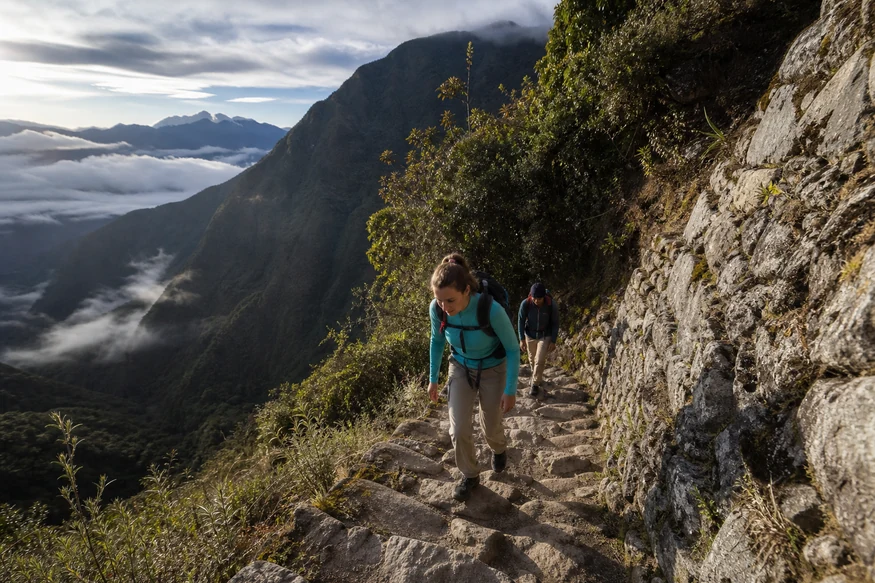
A useful Inca Trail packing list starts by separating three things: the daypack you carry on the trail, any operator-arranged bag carried between camps, and the luggage you leave behind. What belongs in each depends on whether you book the Classic Inca Trail or the shorter route, and on the equipment included in your confirmed itinerary.
Use this checklist to prepare your questions as well as your bags. Before departure, ask your operator for the current personal-bag allowance, sleeping equipment supplied, campsite arrangements, and return-train baggage conditions. A general online list cannot replace those booking-specific instructions.
Keep everything you may need while walking with you. If your booking includes porter-carried personal luggage, it may not be accessible between camps. Pack water according to your guide's instructions, a rain jacket, a warm layer, sun protection, your identification and any medication you normally need. Keep documents and electronics in protective waterproof pouches.
Choose a bag that fits comfortably with the layers you will wear. A supportive fit and sensible contents matter more than buying the largest backpack. Test it on a training walk rather than discovering uncomfortable straps on the first hiking day.
Build your clothing around layers that can be adjusted without unpacking your whole bag. A moisture-managing base layer, an insulating layer and a waterproof outer layer give you more flexibility than a single bulky garment. Keep a dry set for camp separate from clothes used while walking.
Include a sun hat, a warm hat and practical hand protection for cold conditions. Choose quantities around your route length and your operator's allowance. Repeated spare outfits can add weight without improving comfort.
Use footwear you have already worn on hills and uneven surfaces. Check that your toes do not press against the front when descending, and carry socks that work well with those shoes. Address rubbing during training rather than relying on unfamiliar footwear.
If you plan to use trekking poles, confirm the current route and citadel rules with your operator, including any required protective tips. The trail and the visit inside Machu Picchu do not necessarily have identical equipment rules.
Ask exactly what is included: tent, sleeping mat, sleeping bag, liner and any personal duffel arrangement. Do not assume that a sleeping bag or a personal porter allowance is included simply because the itinerary involves camping. Confirm whether supplied equipment counts toward any weight limit.
Label bags clearly and keep fragile items, documents and valuables under your own control. For more context, read our guide to Inca Trail porters and campsite and facilities guide.
The shorter itinerary may use hotel accommodation rather than the multi-night camping arrangement of the Classic route. Check your actual booking. Separate what you carry during the hike from any overnight items, and ask where each bag will be collected or delivered. Our 2-Day vs 4-Day Inca Trail comparison explains the itinerary differences.
Road-transfer luggage space does not determine what you can take on a train. Check the rail company, service, route and conditions printed on your ticket. PeruRail publishes route-specific baggage conditions; Inca Rail publishes its own baggage and custody terms. Arrange larger-luggage storage with the relevant provider before departure rather than assuming it is included.
Leave bulky city luggage, unnecessary electronics and duplicate clothing in a storage arrangement you have confirmed. Do not leave documents or valuables in a bag you cannot access. Avoid packing items based on a generic list without checking whether they are permitted on your route.
Lay everything out, separate the bags and check the actual weight. Compare your plan with the operator's current instructions, then remove duplicates. Review how to prepare for the Inca Trail and Inca Trail rules before your briefing. For itinerary and equipment inclusions, compare our four-day Inca Trail experience.
For the next steps, explore Inca Trail to Machu Picchu: The Ultimate Luxury Trek Experience in Peru.
Published by Meta Peru Travel.