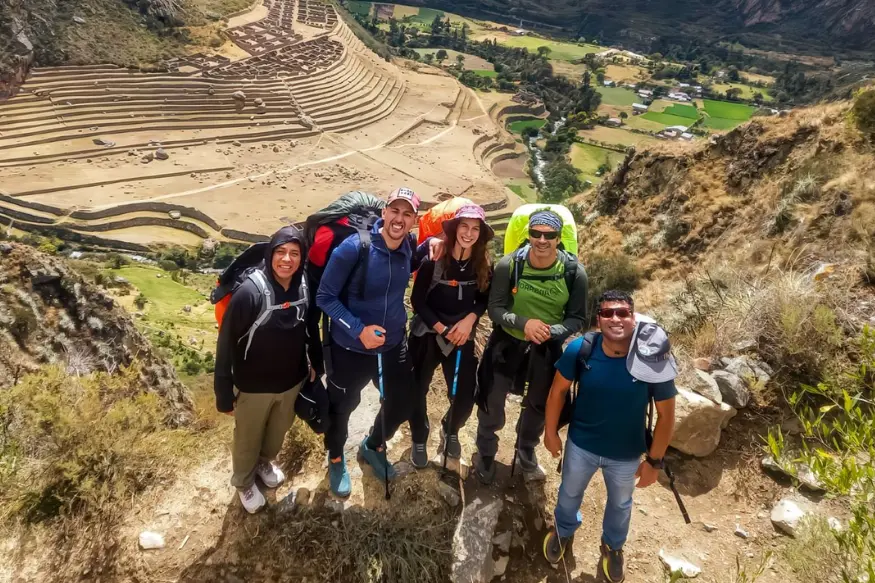
The best time to hike the Inca Trail for most travelers is during the drier period from May through September. These months generally offer lower rainfall and more stable conditions for trekking through the Andes.
However, the best month depends on your priorities. Some travelers prefer the driest conditions, while others value greener landscapes or fewer visitors.
| Period | Typical Conditions |
|---|---|
| May to September | Drier weather and high trekking demand |
| April and October | Transition months with mixed conditions |
| November to March | Rainier period |
| February | Classic Inca Trail normally closed |
The dry season is the most popular time for trekking.
Rainfall is generally lower, and hikers have a better probability of experiencing clear mountain views.
However, dry season does not mean completely dry. Rain can occur in the Andes at any time of year.
May is one of the most attractive months for many trekkers.
Rainfall decreases after the wet season, while mountain landscapes often remain green and lush.
It can provide a good combination of scenery and improving weather.
June is one of the driest periods of the year around Cusco.
It is also a very popular travel month because of Inti Raymi and other celebrations in the region.
Permits, hotels and transportation can experience high demand.
July normally provides favorable trekking weather with limited rainfall.
Days can be sunny, while nights and early mornings at high elevation may become quite cold.
July is also one of the busiest months.
August continues the core dry-season pattern.
Trekkers should prepare for strong daytime sun, dry conditions and cold mornings.
Demand remains high, so booking early is important.
September can still offer relatively dry trekking conditions.
As the month progresses, weather gradually begins transitioning toward the wetter season.
This can be an attractive option for travelers who want good conditions without traveling during the busiest weeks of June or July.
April is a transition month between the rainy and dry seasons.
Landscapes are often green, and rainfall generally begins decreasing.
Travelers should still bring reliable rain protection.
October is another transition month.
The route may be less busy than during peak dry-season months, but rainfall usually becomes more frequent as the wet season approaches.
The wetter period generally extends from November through March.
This does not necessarily mean constant rain every day. Instead, hikers should expect a greater probability of showers, cloud cover and wet trail conditions.
Yes, when the trail is operating and permits are available.
December hikers should expect wetter conditions and should prioritize waterproof equipment.
January is one of the rainier months.
The experience can still be rewarding, particularly because the landscape is extremely green, but trails may be wet and visibility can change quickly.
The Classic Inca Trail traditionally closes during February for maintenance and conservation.
Travelers planning a February visit to Peru should consider alternative routes and always verify current regulations.
June, July and August generally provide some of the best probabilities for clear mountain conditions.
However, clear skies are never guaranteed in a mountain environment.
April and May can be particularly attractive because vegetation remains green following the rainy season while rainfall begins decreasing.
Travelers hoping to avoid the busiest period can consider shoulder months such as April, May, September or October.
The tradeoff is that weather may be slightly less predictable.
Wet weather can increase the physical challenge of the trail because original stone steps may become slippery.
Read our guide to Inca Trail difficulty to understand the terrain before choosing your dates.
Regardless of the month, you should be prepared for changing mountain conditions.
Rain protection, warm layers and sun protection are useful throughout the year.
See our complete Inca Trail packing list.
Popular trekking dates can sell out because access to the Classic Inca Trail is regulated.
If you plan to travel during June, July or August, booking well in advance is particularly important.
Read our guide to Inca Trail permits before confirming flights and hotels.
May through September generally provides the driest conditions, with May and September often offering a good balance between weather and demand.
Yes. Rain is still possible because weather in the Andes can change rapidly.
Nights and early mornings can be particularly cold during the dry-season winter months of June and July.
October can be a good option for fewer visitors, although rainfall becomes increasingly likely.
The best time to hike the Inca Trail depends on whether you value dry conditions, green scenery, lower visitor numbers or specific travel dates.
Once your preferred month is selected, check permit availability before organizing the rest of your itinerary.