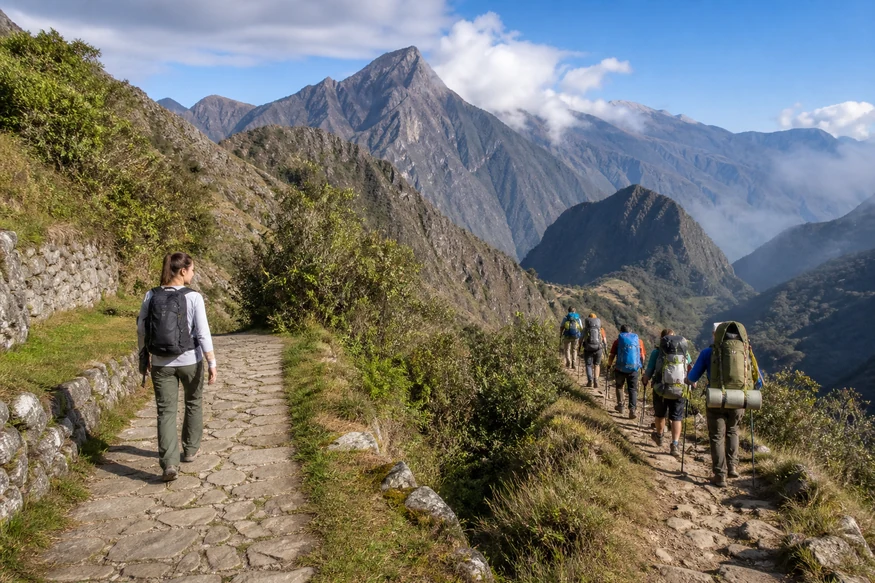
Choosing between the Inca Trail 2 days vs 4 days depends on how much time you have, how much trekking you want and whether the full camping experience is important to you.
Both routes provide a historic approach toward Machu Picchu, but they are not simply the same trek with two days removed. The 4-Day Classic Inca Trail is a complete multi-day mountain journey, while the 2-Day Short Inca Trail focuses on the final section of the historic route.
| Feature | 2-Day Inca Trail | 4-Day Inca Trail |
|---|---|---|
| Overall style | Short trekking experience | Full Classic Inca Trail |
| Camping | Normally no multi-night trail camping | Yes |
| Highest pass | Does not cross Dead Woman's Pass | Crosses Dead Woman's Pass |
| Physical demand | Moderate | Moderate to challenging |
| Time commitment | Lower | Higher |
| Archaeological experience | Important sites on final trail section | Multiple sites across the Classic route |
| Best for | Limited time or avoiding full camping trek | Travelers wanting the complete experience |
The biggest difference is not simply two extra days. The 4-Day Inca Trail is a complete high-Andean expedition with multiple camps, major mountain passes and a much broader section of the historic road network. The 2-Day Inca Trail is a shorter archaeological hike that joins the final approach to Machu Picchu and removes the highest and most physically demanding portion of the Classic trek.
That distinction matters when choosing a tour. A traveler who wants camping, high passes and the feeling of progressing through several ecological zones will usually get more from the four-day route. A traveler who mainly wants to hike into the Machu Picchu area but has limited time may find the short route more practical.
| Question | 2-Day Inca Trail | 4-Day Classic Inca Trail |
|---|---|---|
| How much time do I need? | Shorter commitment | Four trekking days |
| Do I camp? | Usually hotel-based after the hiking section | Multi-night trail camping |
| Do I cross Dead Woman's Pass? | No | Yes |
| How demanding is it? | Moderate, with stairs and elevation gain | Moderate to challenging |
| How much of the historic trail do I experience? | Final section | Much broader Classic route |
| Who is it best for? | Limited time, no multi-day camping | Trekkers seeking the full journey |
Yes, when your goal is a shorter hike with genuine archaeological and landscape value rather than a substitute that feels identical to the four-day trek. The short route includes a substantial walking day and reaches the Machu Picchu area through the historic trail system, making it very different from simply arriving by train and bus.
Its limitation is also its advantage: it skips the multi-day high-mountain section. Travelers should choose it because that shorter format suits them, not because they expect the complete Classic Inca Trail compressed into two days.
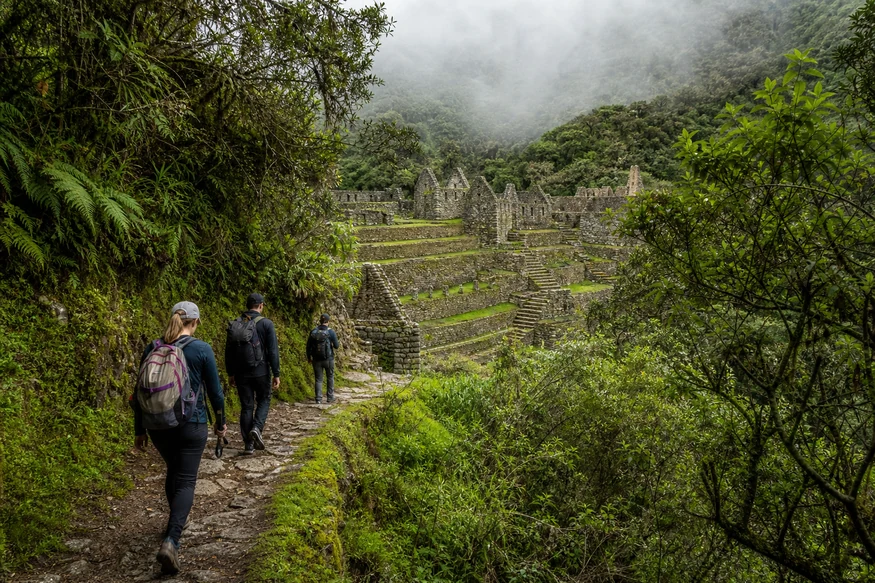
The Short Inca Trail normally uses the final section of the historic approach to Machu Picchu. Travelers enter the trail in the Machu Picchu region, hike through archaeological and cloud-forest sections and approach Machu Picchu without completing the full Classic route.
This option provides a meaningful Inca Trail experience without several days of camping.
The 4-Day Classic Inca Trail is the traditional multi-day trek beginning around the Km 82 area and crossing mountain passes, valleys and archaeological sites before reaching Machu Picchu.
It includes the highest and most physically demanding sections of the route, including Dead Woman's Pass.
The 4-Day route is significantly more demanding because it combines multiple hiking days with high mountain passes, long stairways and overnight camping.
The 2-Day route still involves real hiking and original Inca stairs, but it avoids the highest pass and the cumulative fatigue of several trekking days.
Read our guide to Inca Trail difficulty for a closer look at the Classic route.
The Classic 4-Day trek reaches approximately 4,215 meters at Dead Woman's Pass.
The Short Inca Trail does not cross this high pass, making altitude exposure less extreme. However, travelers still arrive in a high-elevation region and should take acclimatization seriously.
The 4-Day route provides a broader archaeological journey because you move through multiple sites across different elevation zones.
The 2-Day route still includes important archaeological areas, including Wiñay Wayna on the classic short-trail approach, but the overall trail experience is more condensed.
Camping is one of the biggest differences.
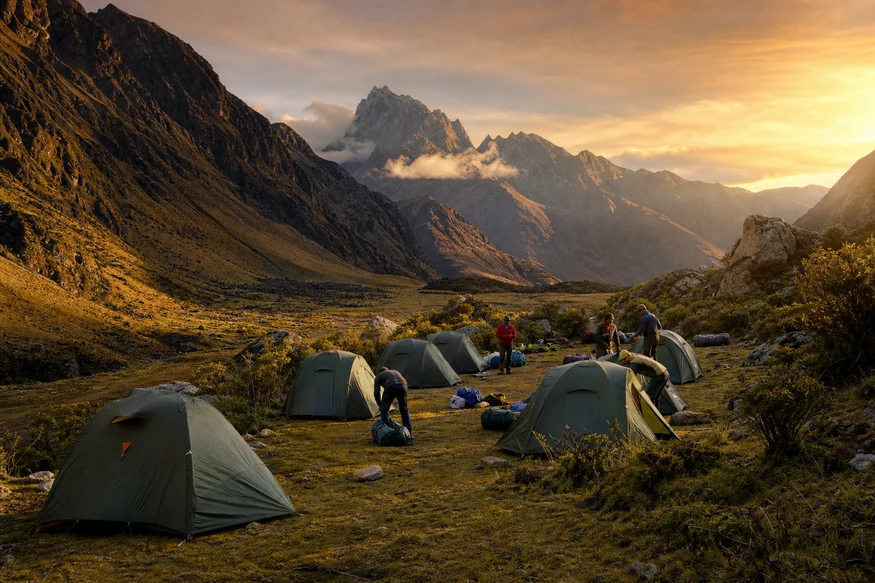
The 4-Day Classic Inca Trail includes multiple nights on the trail. Your trekking team organizes camps, meals and logistical support.
The 2-Day route is often preferred by travelers who want an Inca Trail hike but do not want several nights of camping.
Both are scenic, but the experiences differ.
The 4-Day route passes through a wider range of environments, from high mountain terrain to cloud forest. The 2-Day route concentrates on the greener final approach toward Machu Picchu.
If you are uncertain about several days of high-altitude hiking, the 2-Day route can be a more accessible introduction.
If you already enjoy hiking and want the complete journey, the 4-Day route is usually the stronger choice.
The 2-Day Inca Trail is designed for travelers who want a trekking experience without dedicating four full days to the Classic route.
It can fit more easily into a shorter Cusco itinerary.
The 4-Day route is the clear choice if your priority is the complete Classic Inca Trail experience: mountain passes, camps, archaeological sites and several days immersed in the route.
The 2-Day route is generally more suitable. It allows you to hike part of the historic trail without committing to several nights at campsites.
The 4-Day trek requires more preparation because of the combination of altitude, distance and repeated walking days.
Use our guide on how to prepare for the Inca Trail if you are considering the full route.
The 4-Day route requires more attention to clothing layers, campsite needs and multi-day trekking equipment. The 2-Day route generally requires a lighter setup.
See our Inca Trail packing list before preparing your gear.
Yes. The Inca Trail network is regulated, and access depends on the route and current availability.
Read our Inca Trail permit guide before selecting fixed travel dates.
It is easier than the Classic 4-Day route but still includes real hiking, elevation changes and stone steps.
No. Dead Woman's Pass is part of the Classic multi-day route.
The standard short-route experience does not involve the same multi-night camping program as the Classic 4-Day trek.
Both offer excellent opportunities. The 4-Day route provides more varied mountain environments, while the short route focuses on the final cloud-forest approach.
Choose the 2-Day route for limited time and a lighter trekking commitment. Choose the 4-Day route if the complete Inca Trail journey is one of the main reasons for your trip.
Once you know which format suits you, compare the full luxury four-day Inca Trail tour with our Short Inca Trail 2 Days tour, including their itineraries and inclusions.
The main difference between the Inca Trail 2 days vs 4 days is the type of journey you want. The short route offers a concentrated hiking experience, while the Classic route is a complete multi-day trek through the Andes.