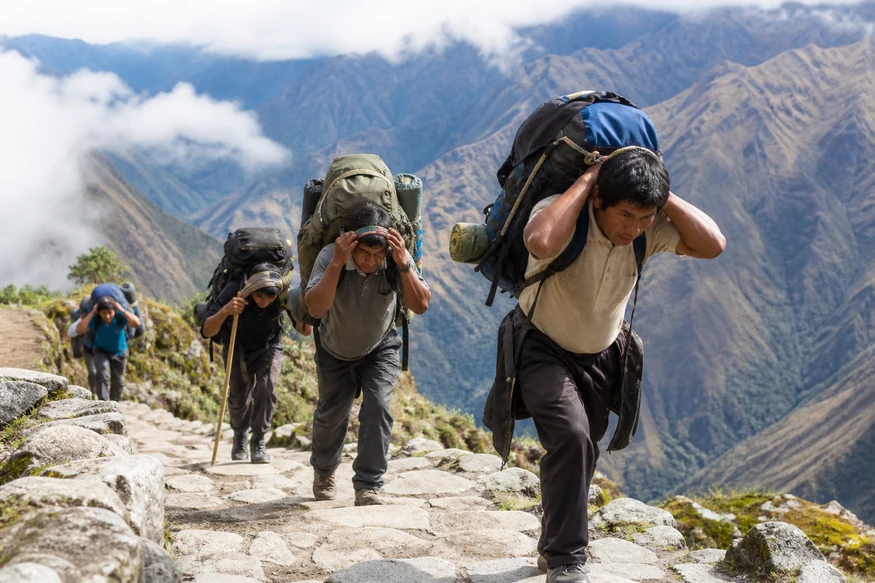
Inca Trail porters are an essential part of the logistics behind many Classic Inca Trail expeditions. They transport group equipment and supplies through mountain terrain where motorized vehicles cannot operate.
Their work makes multi-day camping possible, but travelers should understand what porters actually do, what they normally do not carry and why responsible working conditions matter when choosing a trekking company.
The Classic Inca Trail works like a moving expedition. Each morning a trekking group leaves camp, while the support team breaks down equipment, organizes loads and moves the camp operation forward. At the next designated area, tents, cooking equipment and supplies must be ready again. Porters are central to making that system work.
This is also why the cheapest advertised trek is not automatically the best value. A responsible Inca Trail operation has costs that go beyond the traveler's ticket: guides, cooks, porters, food, camping equipment, transport, permits and compliance with labor and protected-area requirements all form part of the service.
| Type of Item | Usually Handled By | Important Note |
|---|---|---|
| Group tents | Support team | Part of expedition logistics |
| Cooking equipment | Support team | Used to prepare group meals |
| Food and group supplies | Support team | Moved between camps |
| Personal duffel | Depends on package | Check the included allowance |
| Water and rain jacket | Traveler | Keep accessible while hiking |
| Passport and medication | Traveler | Should remain with you |
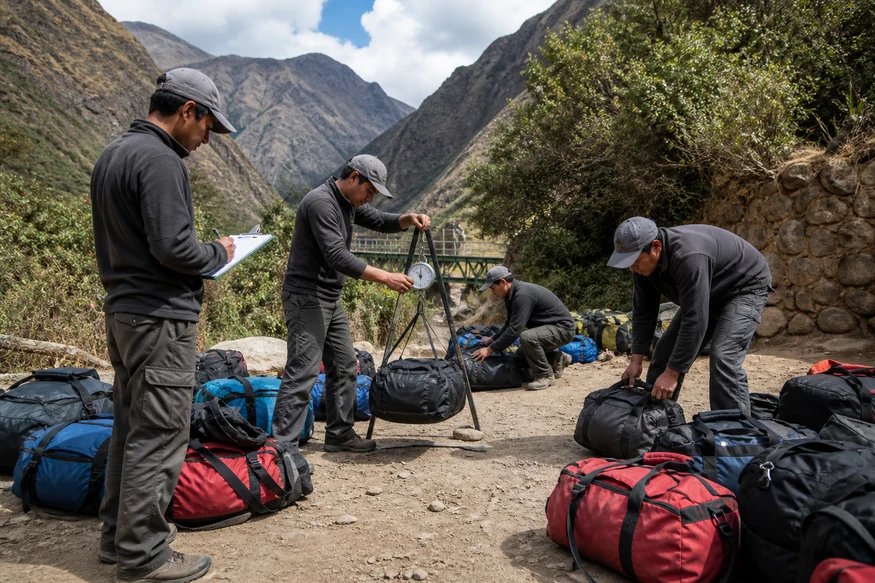
Group porter support covers the equipment required to operate the trek. Personal porter or duffel service refers to an allowance for some of your own overnight belongings. Tour companies package these services differently, so the phrase “porters included” is not enough information by itself.
Before paying, ask how much personal weight is included and what you will carry during the day. This prevents one of the most common packing mistakes: arriving with more personal gear than the booked service allows.
A porter is a worker who transports equipment, supplies and other items needed for trekking expeditions through areas where vehicles cannot operate.
Peru has specific labor legislation for porter work, recognizing porters as workers and establishing protections related to their employment and working conditions.
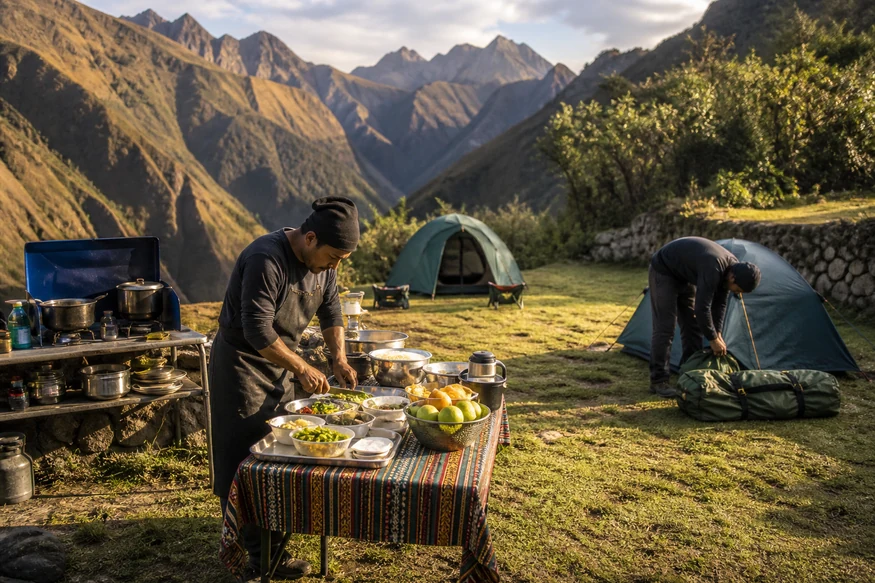
The Classic Inca Trail requires a moving camping operation. Tents, cooking equipment, food and other group supplies must travel between designated camps.
Porters help move this equipment while travelers hike the route.
The exact load depends on the operator and service, but porter teams may transport:
Even when porter support is included, travelers normally keep a daypack with items they may need while walking.
This commonly includes:
Use our Inca Trail packing list to separate daypack essentials from other equipment.
Not necessarily. This depends on the service you booked.
Some packages include a personal porter allowance or duffel service, while others focus primarily on group equipment. Confirm the exact arrangement before departure.
Porters and travelers do not necessarily remain together every minute of the day. Your essential clothing, water, medication and valuables should stay in your daypack.
Do not place something you may urgently need during the hike inside luggage transported separately.
| Team Member | Main Role |
|---|---|
| Porter | Transports expedition equipment and supplies |
| Cook | Organizes and prepares meals |
| Guide | Leads the group, interprets the route and coordinates the experience |
Large groups may involve additional support roles depending on the operator and itinerary.
Yes. Peru's porter legislation recognizes porter work as employment and establishes labor protections. The legal framework has been updated in recent years, and SERNANP has also worked with porter organizations on digital registration for workers operating on the Inca Trail network.
This is one reason travelers should avoid treating porter service as an informal extra with no labor context.
When comparing tour prices, do not evaluate only tents, meals and transportation. The conditions provided to the trekking team are also part of the quality of an operator.
Responsible operations should comply with applicable labor and route regulations.
It can make the trek more comfortable by reducing the amount of equipment you personally carry, but you still need to walk the entire route yourself.
Dead Woman's Pass, stone staircases and several hiking days remain physically demanding.
Read our guide to how difficult the Inca Trail is.
Not every traveler needs additional personal porter service. If you are comfortable carrying a light daypack and your tour already includes group logistics, the standard arrangement may be enough.
Travelers who want to carry less personal gear should ask their operator what optional services are available.
The porter and support team plays a major role in moving the camp operation from one designated overnight area to the next.
To understand what the overnight experience is like, read our guide to Inca Trail campsites, toilets and showers.
Tipping is a separate question from wages and legal employment obligations. If you choose to tip, ask your guide how the group normally organizes gratuities so distribution is clear and respectful.
A tip should not be treated as a substitute for an operator meeting its responsibilities to staff.
Do not use porter support as a reason to overpack. Bring what you need for the trek and stay within the allowance communicated by your operator.
Excess equipment complicates logistics and provides little benefit on a four-day trek.
Porter teams move through the regulated trekking network as part of expedition logistics, although their pace and daily responsibilities differ from those of travelers.
You should plan to carry the water you need while hiking. Your operator should explain refill arrangements.
Yes. Even with porter support, you need a practical daypack for essentials.
Do not assume that you can add arbitrary weight. Follow the allowance and packing instructions provided by your operator.
Peruvian law recognizes porter work as an employment relationship subject to specific protections.
For a complete example of guided trekking, porter support and organized camp logistics, review the inclusions in our Luxury Inca Trail 4 Days tour.
The quality of an Inca Trail experience depends on more than the guide and the scenery. Porters, cooks and other support staff make multi-day operations possible.
When comparing services, consider how clearly the operator explains staffing, luggage allowances and compliance with current regulations.