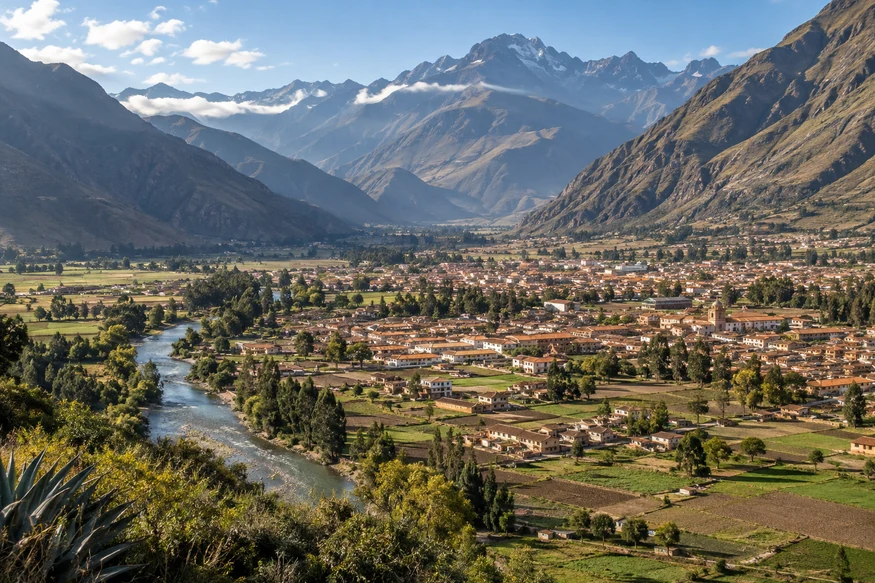
Urubamba, Peru, is a practical and comfortable base in the Sacred Valley for travelers who want a quieter stay between Cusco and Machu Picchu. The town has everyday services, restaurants and road access to Pisac, Chinchero, Maras, Moray and Ollantaytambo. It is not simply a transfer point: its valley setting makes it useful for a slower itinerary.
This guide focuses on where to stay, what to do in Urubamba, how to reach it and when it makes more sense than staying in Cusco or Ollantaytambo.
Urubamba lies on the valley floor northwest of Cusco, beside the river that gives the town its name. It sits between the eastern Sacred Valley around Pisac and the western route toward Ollantaytambo. That position makes it an effective base for day trips in different directions.
The town and surrounding hotels are spread out. A property described as “Urubamba” may be outside the center, so check the exact address and transfer time before booking.
Yes, especially if your Peru trip needs a slower day. Urubamba offers valley scenery, local food, a walkable town center and access to nearby attractions without returning to Cusco every evening. It is less compelling if you have only a few hours and want a dense list of headline sights in the town itself.
For a broader regional plan, see our Sacred Valley travel guide. This article focuses on Urubamba as a base rather than trying to replace that itinerary guide.
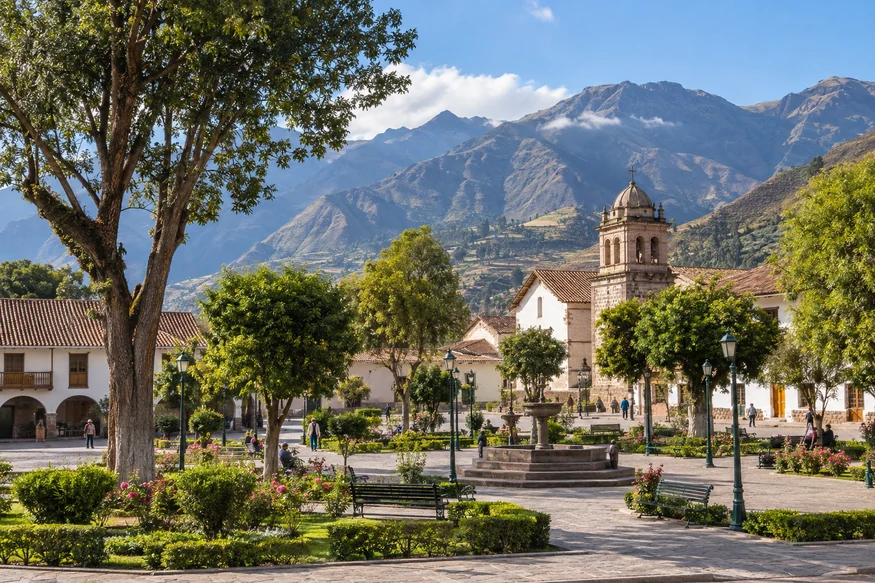
Start at the plaza and explore the surrounding streets at an unhurried pace. The center is useful for meals, basic supplies and a glimpse of everyday valley life. Ask before photographing residents and do not block shop entrances.
Many hotels and walking routes offer views of fields, river and mountains. The scenery changes dramatically with the season: greener in the rainy months and often clearer in the dry months. If you plan a longer walk, confirm access and conditions locally.
Urubamba is convenient for exploring the Maras Salt Mines and Moray archaeological site. Their admission rules differ; check each guide rather than assuming one ticket covers both.
Both work as dedicated outings. Pisac ruins reward a focused archaeological visit, while Chinchero combines terraces, textiles and a high plateau. Avoid squeezing both into a short afternoon.
Choose a town-center hotel if independent restaurants and easy errands matter. Choose a countryside lodge if scenery, privacy and on-site dining are priorities. For a rail departure the next morning, compare your actual driving time to Ollantaytambo station rather than relying on the hotel’s marketing description.
Our Sacred Valley luxury hotels guide compares premium stays across the region. Urubamba is a particularly strong option for travelers who prefer resort-style space and a slower pace.
| Consideration | Urubamba | Cusco |
|---|---|---|
| Atmosphere | Quieter valley setting | Historic city with more nightlife and museums |
| Nearby trips | Central Sacred Valley routes | City attractions and broader regional departures |
| Altitude | Lower than central Cusco | Higher city elevation |
| Train logistics | Road transfer to station still needed | Longer road transfer for many rail plans |
Many travelers benefit from both: begin with a Cusco city stay, then move into the valley before Machu Picchu. See our detailed Sacred Valley vs Cusco comparison.
Urubamba is better for a relaxed hotel stay and central access to multiple valley routes. Ollantaytambo is better when train-station proximity, historic streets or a very early rail departure are the priority. Read our dedicated Ollantaytambo town guide for the station and overnight logistics.
Most visitors arrive by road. Routes and travel times vary with the departure point, traffic, weather and stops. Private transport is simplest with luggage or a multi-stop itinerary; shared transport can be economical but requires checking current departure points and return arrangements.
When your arrival is followed by sightseeing, a guided Sacred Valley day tour may coordinate the main stops. Confirm whether your chosen product allows hotel drop-off in Urubamba before booking.
Train departures and station offerings can change by operator and season. Many travelers staying in Urubamba transfer by road to Ollantaytambo station, then take a train to Machu Picchu Pueblo. Check the exact station printed on your ticket; do not assume a train labeled “Sacred Valley” departs from Urubamba town.
For the complete route, read how to get to Machu Picchu.
One night works as a pause before the train. Two nights allow a full valley day without changing hotels. Three nights suit travelers who want Maras–Moray, Pisac or Chinchero at a more comfortable pace. The best choice depends on whether the hotel itself is part of the experience.
The dry season usually offers more reliable walking conditions and clearer views. The rainy season brings greener scenery but can complicate road travel and outdoor plans. Build flexibility into any itinerary with multiple timed connections.
For seasonal trade-offs across the region, see our best time to visit Cusco guide.
Yes. It is one of the valley’s principal towns and a common base for nearby excursions.
Yes. The valley floor around Urubamba sits lower than central Cusco, although altitude can still affect visitors.
Choose Urubamba for a quieter resort-style base and Ollantaytambo for station access and a historic town stay.