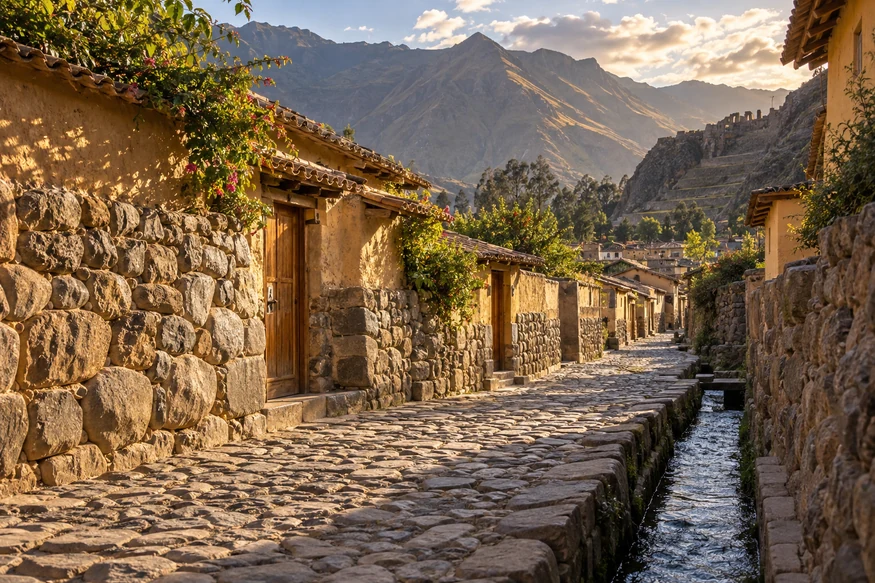
Ollantaytambo town is more than the place where many travelers board a train to Machu Picchu. Its narrow stone streets, working water channels and mountain setting make it one of the most distinctive places to stay in Peru’s Sacred Valley.
This guide is about the town: where to stay, how the train station fits into your trip, what to do beyond the archaeological site and how to plan an overnight stop. For tickets, opening hours and a detailed visit to the fortress, use our separate Ollantaytambo ruins guide.
Ollantaytambo lies toward the western end of the Sacred Valley, on the route from Cusco and Urubamba toward Machu Picchu. Its historic center sits near the major archaeological complex, while the rail station is in another part of town. Check your hotel’s exact position if you have luggage or an early departure.
Yes. An overnight stay lets you enjoy the lanes and plaza after day-trip groups leave, visit the ruins without rushing, and begin the train journey with a shorter morning transfer. This is especially useful when your Machu Picchu train departs early.
Travelers seeking a large resort may prefer Urubamba; travelers seeking historic atmosphere and rail convenience often prefer Ollantaytambo.
Explore the stone lanes slowly and notice the channels that still carry water through parts of town. These are lived-in streets, not a theme park; give residents space and ask permission before taking portraits.
The plaza is a practical meeting point for meals and orientation. It can be busy during the day, but evenings are often calmer once large groups depart.
The fortress and terraces deserve their own visit rather than a rushed photo stop. Opening rules and ticket arrangements may change; our ruins article covers this attraction in detail.
From Ollantaytambo, you can build a valley route toward Moray, Maras or Chinchero, depending on the time available and road conditions.
The station is a major departure point for trains toward Machu Picchu Pueblo. Your booking confirmation determines the operator, departure station, boarding time and luggage allowance. Do not rely on a generic itinerary: a ticket may specify a different station or an integrated bus-and-train service.
Arrive with time for check-in and security procedures, carry the same identification used in the booking and confirm current baggage rules with your operator. If your hotel is in the historic center, ask it about transfer or walking conditions with luggage.
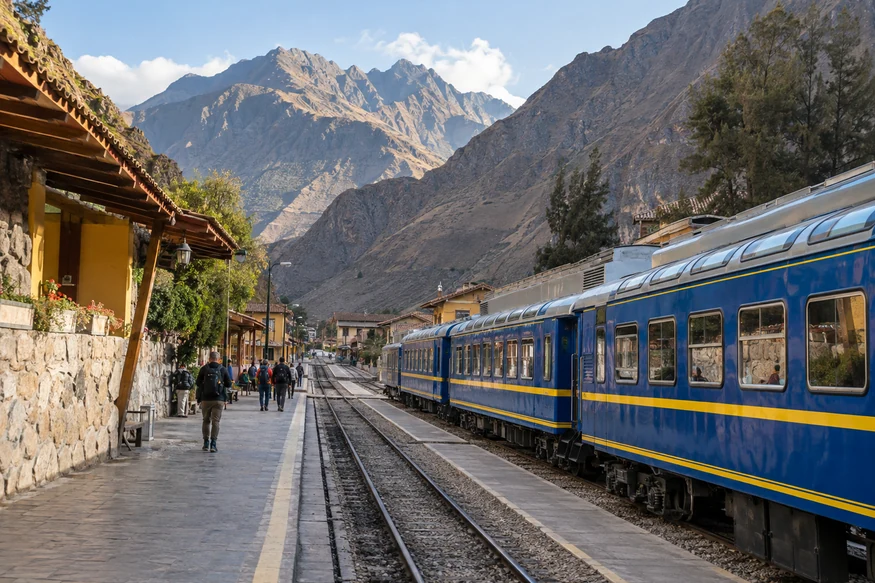
Follow the reporting time stated on your ticket rather than a universal rule. Add a buffer for hotel checkout, traffic, luggage handling and finding the correct boarding area. Missing a timed train can disrupt a Machu Picchu entry reservation.
Stay near the historic center for atmosphere, restaurants and access to the ruins. Stay nearer the station if an early departure or heavy luggage makes the transfer more important. Some properties sit outside the center and require a vehicle; verify this before choosing a room.
For premium alternatives across the region, compare our Sacred Valley hotel guide.
| Factor | Ollantaytambo | Urubamba |
|---|---|---|
| Train departure | Major station in town | Usually requires a road transfer |
| Atmosphere | Historic lanes and compact center | Broader valley and resort-style stays |
| Best for | Early rail departure or cultural stop | Relaxed multi-night base |
| With luggage | Check walking route to hotel | Vehicle access varies by property |
Neither base is universally better. If the train is the next morning, Ollantaytambo often simplifies the day. If you want several valley outings and a spacious lodge, Urubamba may fit better.
Most travelers arrive by road through the Sacred Valley. Journey time depends on traffic, departure point, weather and stops. A private transfer is practical with luggage; a guided route can turn the transfer into a full valley day.
Meta Peru Travel’s two-day Sacred Valley and Machu Picchu tour is relevant if you prefer coordinated transport, train and guiding. Confirm the itinerary and current inclusions before booking.
Yes, but allow enough time for both the archaeological site and the town. A quick stop often covers only the fortress. Staying overnight reveals a quieter side of the historic center and reduces pressure before a rail departure.
Morning and late afternoon are pleasant for walking, with softer light and cooler conditions. The rainy season can make stone streets slippery. Bring shoes with grip and avoid stepping into the water channels.
No. Ollantaytambo is in the Sacred Valley; Machu Picchu Pueblo, also called Aguas Calientes, is the town reached by train near the archaeological sanctuary.
Many central accommodations are within walking distance, but the route and effort vary with your hotel location and luggage. Confirm directly with the property.
One night is useful for a relaxed town visit and a train the following day. Two nights provide more flexibility for the ruins and surrounding valley.
For the next steps, explore Sacred Valley Luxury Travel Guide: Best Places, Hotels and Private Experiences.
Published by Meta Peru Travel.