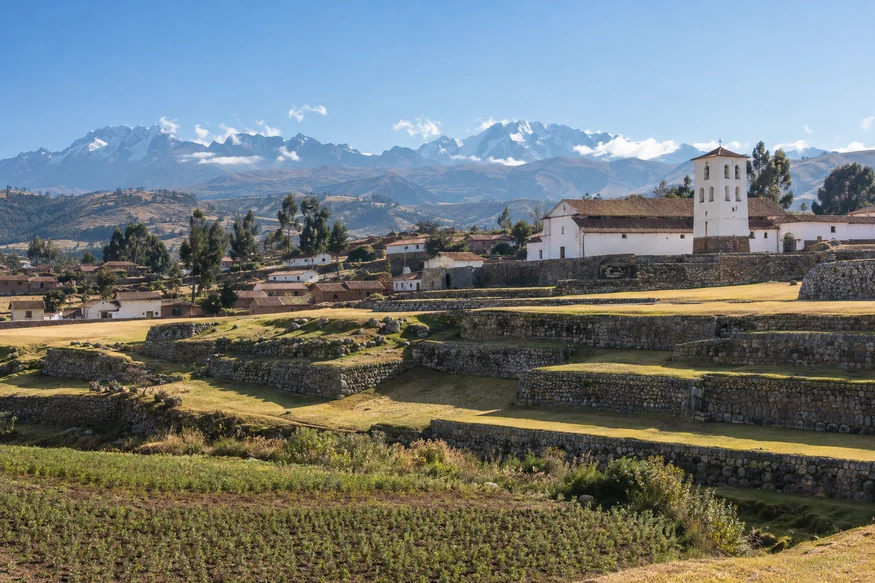
Chinchero, Peru, is a high-Andean town northwest of Cusco known for Inca terraces, a colonial church, living Quechua traditions and exceptional textile craftsmanship. It is often treated as a short stop on the way to Maras and Moray, but travelers who allow enough time discover one of the Sacred Valley region's most culturally layered destinations.
This practical guide explains what to see in Chinchero, how to travel from Cusco, which ticket you need, how altitude affects a visit and how to combine the town with nearby attractions.
Chinchero combines archaeology, architecture, agriculture and living culture in one compact area. Inca terraces extend below the historic center, while colonial buildings occupy an important pre-Hispanic setting. Quechua remains widely spoken and textile knowledge continues through local families and cooperatives.
The town also sits on a practical route between Cusco and the western Sacred Valley. A thoughtful visit provides context before exploring Moray and the Maras Salt Mines.
Chinchero lies northwest of Cusco on a high plateau above the Sacred Valley. Although it belongs to the Cusco region, its altitude is higher than both Cusco city and the valley floor around Urubamba.
The open plateau provides wide mountain views, but it can also feel cold, windy and exposed. Weather often changes quickly, especially during the rainy season.
Private transport commonly takes 45 to 60 minutes, depending on traffic, road works and the starting point in Cusco. Shared vans also serve the route, although departure locations and operating patterns should be confirmed locally.
Private or organized transport is most convenient when continuing to Moray and Maras. Meta Peru Travel's Chinchero, Maras and Moray tour coordinates the route without requiring separate connections.
The archaeological zone includes broad Inca terraces, carved stone, walls and ceremonial spaces adapted to the natural slope. The terraces are especially impressive when viewed from above and remain connected to the agricultural landscape surrounding the town.
The colonial church stands within the historic complex and contains important religious art. Opening access can vary around services, conservation work and local events. Dress respectfully, keep noise low and follow photography restrictions.
Local workshops demonstrate the preparation of wool, natural dyes, spinning and weaving. The most valuable visits explain technique and meaning rather than presenting textiles only as souvenirs.
The market brings together textiles, crafts and local products. For shopping details and the best days to go, read our dedicated Chinchero Market guide.
The archaeological site is normally included in the Cusco Tourist Ticket, particularly the relevant Sacred Valley circuit or Integral Ticket. A Machu Picchu entrance ticket does not cover Chinchero.
Ticket prices, circuit validity and authorized sales points can change. Confirm current information with COSITUC and carry the identification used for purchase.
Access hours for the archaeological complex and church can differ and may change on holidays, during ceremonies or because of conservation work. Verify the current schedule before a tightly timed visit.
Morning generally brings clearer views, cooler temperatures and easier connections to Moray and Maras. Sunday can feel livelier around the market but may also bring more visitors.
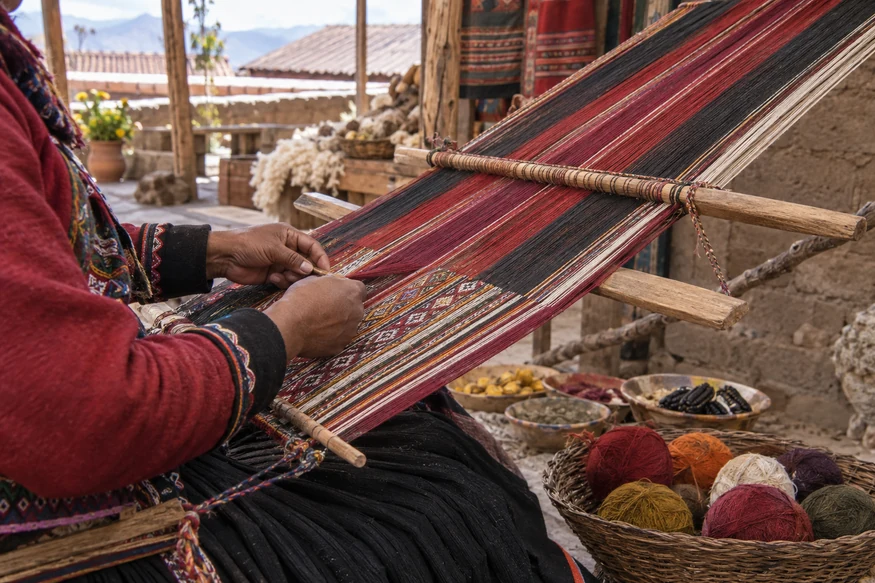
Allow at least two hours for the archaeological site, historic center and a focused textile demonstration. Three hours is more comfortable if you want to shop, photograph the landscape or listen to a detailed cultural explanation.
A quick 30-minute stop misses much of what distinguishes Chinchero. If your itinerary includes three sites in half a day, start early and avoid extended unscheduled shopping stops.
At approximately 3,760 meters, Chinchero is higher than Cusco. Visitors may notice breathlessness, headache or fatigue, particularly during their first days in the Andes.
Walk slowly, drink water and avoid rushing up steps. Travelers with persistent or severe symptoms should descend and seek medical guidance. Good fitness does not replace acclimatization.
The dry season generally offers clearer mountain views and easier walking conditions. The rainy season brings greener fields, dramatic clouds and occasional slippery paths. Chinchero remains visitable year-round with suitable clothing and schedule flexibility.
Morning is usually the best time of day for views. Bring layers even when Cusco feels warm because the plateau is exposed to wind.
| Stop | Main experience | Suggested time | Ticket |
|---|---|---|---|
| Chinchero | Terraces, church and textiles | 2–3 hours | Cusco Tourist Ticket for archaeology |
| Moray | Concentric Inca terraces | 1–1.5 hours | Cusco Tourist Ticket |
| Maras | Working salt ponds | 45–90 minutes | Separate local admission |
Visiting all three is possible in one day and commonly arranged as a half-day or full-day route. A slower private itinerary provides more time for cultural interpretation and photography.
Ask permission before photographing residents or artisans, listen before negotiating and avoid treating demonstrations as staged entertainment. When buying textiles, ask who made the item, what fibers were used and whether the dyes are natural or synthetic.
Paying a fair price supports the time and knowledge involved in skilled handweaving. Respect barriers at the archaeological site and do not climb terrace walls.
Yes. Chinchero is particularly worthwhile for travelers interested in Inca history, Andean textiles and living culture. It also creates a natural link between Cusco and the attractions around Maras and Moray.
The archaeological site is normally included in the relevant circuit. Confirm the current option with COSITUC.
Yes. Chinchero is around 3,760 meters, compared with approximately 3,400 meters in central Cusco.
Yes. Chinchero, Moray and Maras form one of the most practical routes west of Cusco.