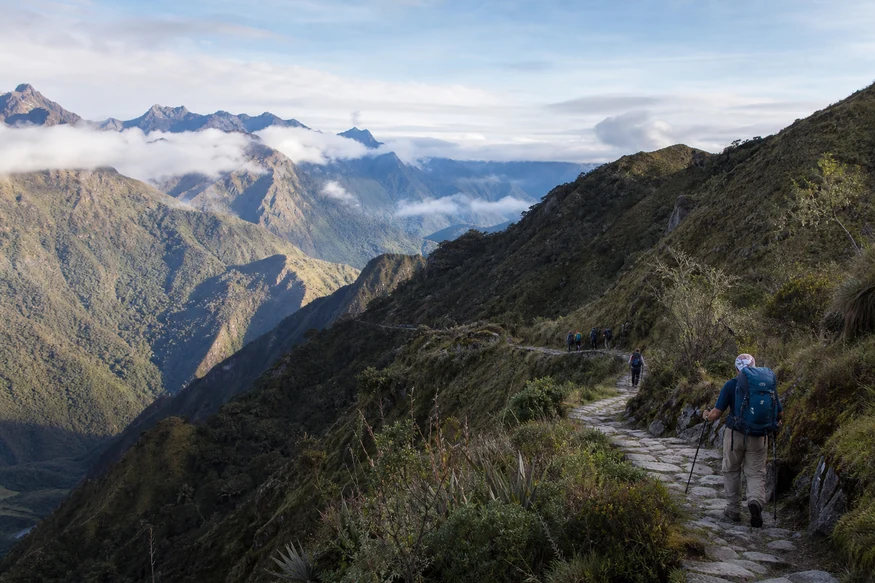
The Classic Inca Trail distance is commonly described as approximately 43 kilometers, or 26 miles. The number sounds manageable, but it is spread across high-altitude terrain with thousands of stone steps, sustained climbs and long descents. Elevation and trail surface usually matter more than mileage alone.
The Short Inca Trail covers a smaller portion of the historic route, while a five-day trek distributes the classic distance across more time. Exact totals can vary slightly with campsite allocation, access points and how a tour measures connecting sections.
| Route | Approximate Trail Distance | Walking Pattern | Key Difference |
|---|---|---|---|
| Short Inca Trail 2 Days | About 10–12 km / 6–7 mi of principal hiking | One substantial hiking day plus the Machu Picchu visit | Avoids the highest pass and multi-night camping |
| Classic Inca Trail 4 Days | About 43 km / 26 mi | Several consecutive hiking days | Complete classic route with major elevation change |
| Inca Trail 5 Days | Similar classic-route distance | Mileage and archaeological visits spread over more time | More gradual daily rhythm |
| Luxury Inca Trail 4 Days | About 43 km / 26 mi | Classic trekking profile with premium support | Comfort changes; the trail does not become shorter |
These figures are planning estimates rather than survey measurements. Ask for the current route notes for your departure if an exact camp allocation or access arrangement affects your decision.
Forty-three kilometers on flat ground is not equivalent to the same distance on the Inca Trail. Much of the route sits above 3,000 meters, and the path repeatedly gains and loses elevation. Original stonework creates irregular step heights, so the body works harder than it would on a smooth track.
You also need to recover and walk again the next day. The cumulative effect of altitude, climbing and descending explains why a relatively modest mileage can feel like a serious expedition.
The Classic route reaches approximately 4,215 meters at Dead Woman's Pass. Thinner air can reduce pace, especially before a traveler has fully acclimatized. A slow kilometer of climbing at this elevation may require more time and energy than several easy kilometers lower down.
Read our complete guide to Inca Trail altitude when deciding how many acclimatization days to allow in Cusco or the Sacred Valley.
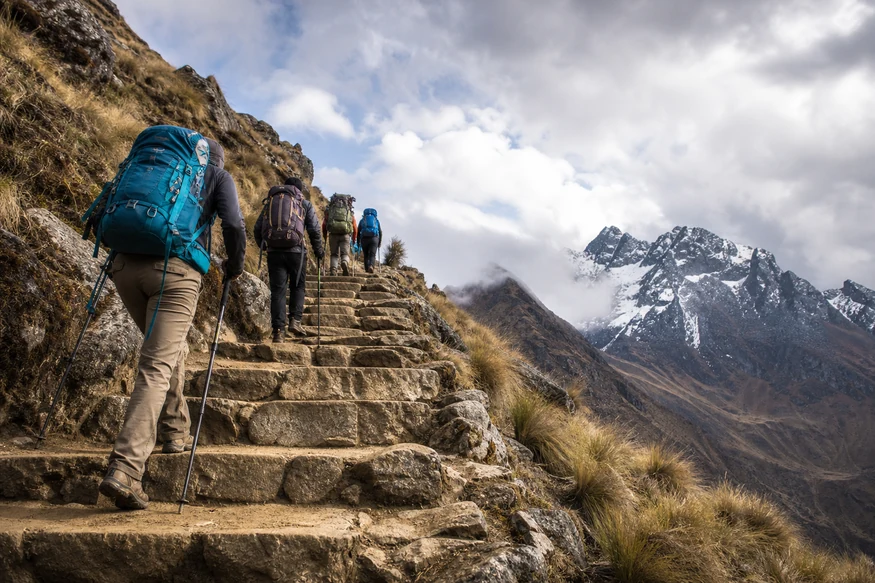
Travelers often focus on the high pass and underestimate the downhill distance. Long descents over uneven stone steps place repeated load on the knees and quadriceps. Wet conditions can slow progress further because each step requires more deliberate placement.
Training should include controlled descents, stairs and hills rather than only flat-distance walking. Our honest Inca Trail difficulty guide explains how terrain, weather and consecutive days interact.
Most Classic Inca Trail days involve several hours of movement, with breaks for meals, viewpoints and archaeological interpretation. A common practical range is roughly five to eight hours, but the hardest day, campsite assignment, group pace and weather can move a day outside that range.
The Short Inca Trail concentrates its main walking into one substantial day. It covers fewer kilometers overall, yet the initial ascent and stone stairs mean it should not be treated as a casual city walk.
Not necessarily. The main advantage is usually how the classic route is distributed, allowing a different pace and more time for stops. It should not be assumed to add an entirely separate long-distance trail.
Travelers who value a less compressed rhythm can review the five-day Inca Trail, while those prioritizing time can compare it with the shorter products.
Choose the Short Inca Trail if you want a meaningful hike and the historic approach toward Machu Picchu without the highest pass or several camping nights. Choose the Classic route when you want the full multi-day challenge. A luxury service improves camp comfort and support, but it does not remove the climbs or mileage.
For a side-by-side decision, use our 2-Day vs 4-Day Inca Trail guide. It focuses on commitment, camping and physical demand rather than reproducing a day-by-day itinerary.
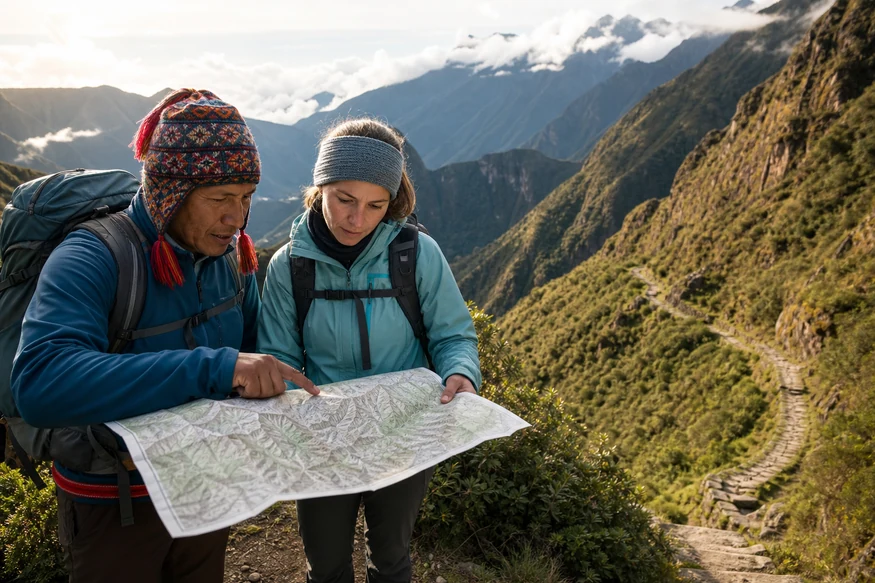
Distance training works best when it is progressive and repeatable. Follow our guide on how to prepare for the Inca Trail for a more complete framework.
Every extra kilogram becomes more noticeable on a long climb. Keep water, layers, rain protection, sun protection, medication and daily essentials accessible, but avoid carrying items already handled by the expedition team.
Porter arrangements differ by package. Review our Inca Trail porter guide and confirm the personal allowance before packing.
Distance can be measured from different access points, and operators may include or omit short transfers, camp deviations or walking around sites. GPS devices also produce slightly different readings in steep valleys.
A variation of a few kilometers does not change the central planning truth: the Classic Inca Trail is a roughly 43-kilometer high-altitude trek, and its elevation profile is more important than a perfectly exact total.
Approximately 26 miles, or 43 kilometers, depending on the specific measurement and camp arrangement.
No. Its main hiking section is commonly around 10–12 kilometers and includes a sustained ascent. Actual walking time depends on pace and conditions.
No. The Classic route distributes that approximate distance across several consecutive trekking days.
No. Better camp comfort and support can improve recovery, but travelers still walk the same classic route.
No. Altitude, elevation gain, stone stairs, weather and repeated hiking days are equally important.
Plan for approximately 43 kilometers or 26 miles on the Classic Inca Trail and roughly 10–12 kilometers or 6–7 miles of principal hiking on the short version. Treat those numbers as context, not the entire challenge. Train for hills and stairs, acclimatize properly and select the route whose terrain and daily rhythm fit your experience.