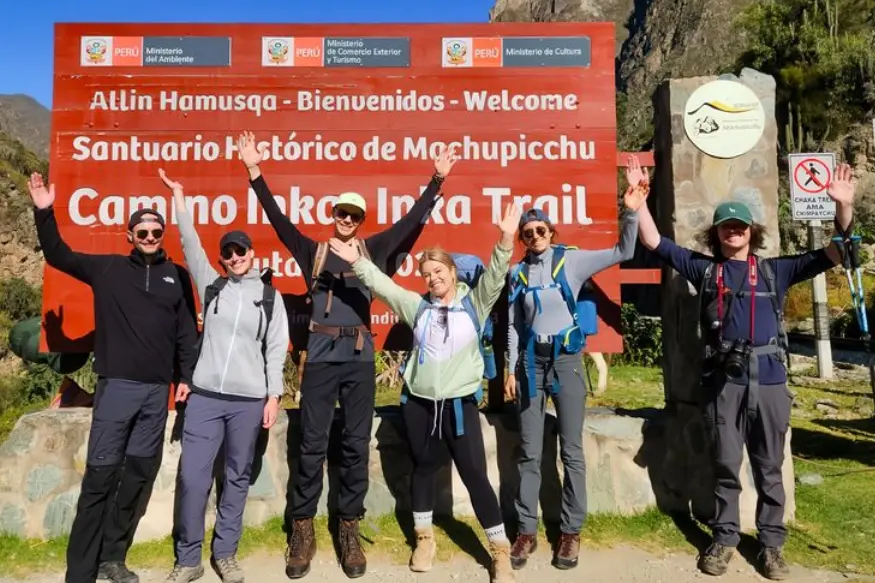
Inca Trail permits are required to enter the regulated Classic Inca Trail to Machu Picchu. Because access is limited, travelers should organize the trek in advance instead of expecting to arrive in Cusco and book the route at the last minute.
Permit availability is one of the most important factors when planning an Inca Trail itinerary.
Yes. Access to the Classic Inca Trail is regulated.
You cannot simply arrive at the trailhead and begin hiking independently like you might on an unrestricted public trail.
The route passes through environmentally sensitive landscapes and important archaeological areas.
Controlling daily access helps manage tourism and contributes to the conservation of the trail.
The daily capacity includes not only travelers but also members of trekking support teams.
When you reserve an authorized Inca Trail trek, the operator arranges the required access using the traveler information supplied during booking.
This is why accurate passport or identification details are important.
The Classic Inca Trail is normally organized through an authorized trekking operator rather than as an independent walk.
The operator manages the permit together with guide services and the logistical requirements of the multi-day route.
Book as soon as your travel dates are reasonably confirmed.
There is no universal booking date that guarantees availability because demand varies by month and departure date.
However, waiting until shortly before your trip increases the risk that your preferred date will no longer be available.
For popular dry-season dates, several months of advance planning is generally advisable.
June, July and August can attract particularly strong demand.
Check our guide to the best time to hike the Inca Trail when deciding when to travel.
Yes. Specific dates can reach their authorized capacity.
Once a date is unavailable, simply contacting another tour company does not necessarily create additional spaces because all authorized operators depend on the same regulated trail capacity.
Occasionally a traveler may find availability close to departure, but relying on this is risky.
The Inca Trail is not a good activity to leave until the final days of your Peru itinerary if hiking it is a major travel priority.
Provide information carefully and make sure it corresponds with the document you expect to use during your trip.
Inca Trail access is linked to traveler information and should not be treated like an unrestricted ticket that can simply be passed to another person.
If your travel plans change, contact your operator as soon as possible.
Date changes can be difficult because availability is controlled separately for each departure date.
You should not assume a confirmed reservation can automatically be transferred to another day.
If the Inca Trail is one of the primary reasons for your trip to Peru, check trail availability before committing to completely inflexible travel dates.
Our Inca Trail packing list covers the main equipment you should consider.
Having a permit guarantees access to the route, but it does not remove the physical challenge.
Read our guide to Inca Trail difficulty before departure.
The Classic Inca Trail reaches more than 4,000 meters above sea level.
Allow time to acclimatize in Peru and review our Inca Trail altitude guide.
No. The Classic Inca Trail is a regulated route and requires authorized access.
Yes. Popular departure dates can reach capacity well in advance.
You should not plan to arrive at the trailhead and purchase access. Organize the trek before your departure date.
Yes, especially if the Inca Trail is an important part of your trip or you are traveling during high-demand months.
Inca Trail permits are one of the main reasons the route requires more preparation than many other hikes in Peru.
Confirm your preferred dates early, then organize acclimatization, equipment and the rest of your Cusco itinerary around your trekking departure.