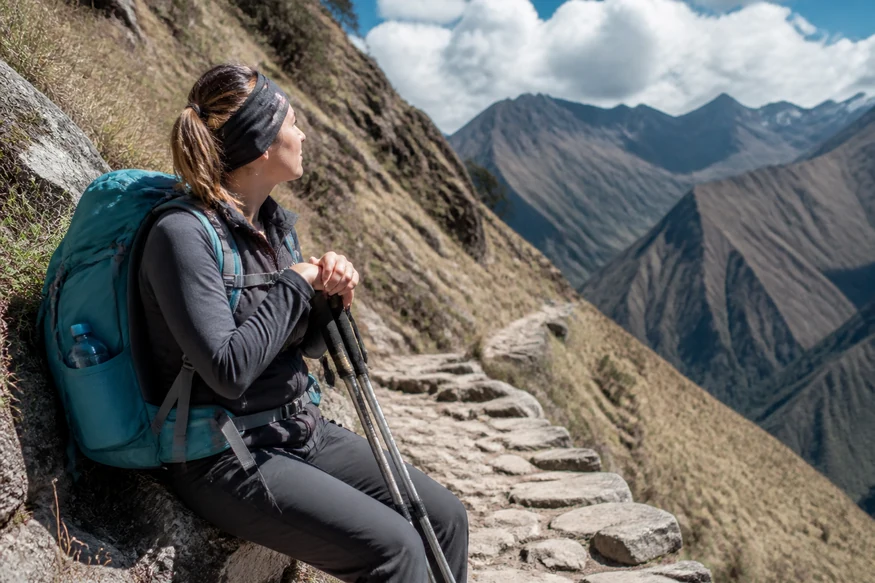
The Inca Trail altitude is one of the most important factors travelers should understand before hiking to Machu Picchu. The Classic Inca Trail moves through several elevation zones and reaches more than 4,000 meters above sea level.
The highest point is Dead Woman's Pass, where the combination of elevation and a sustained uphill climb creates one of the most demanding sections of the entire trek.
The highest point of the Classic Inca Trail is Dead Woman's Pass, locally known as Warmiwañusca.
Its elevation is approximately:
This is considerably higher than Machu Picchu itself.
| Location | Approximate Elevation |
|---|---|
| Km 82 Trailhead | 2,600 m / 8,530 ft |
| Wayllabamba | 3,000 m / 9,843 ft |
| Dead Woman's Pass | 4,215 m / 13,829 ft |
| Runkurakay Pass | 3,950 m / 12,959 ft |
| Wiñay Wayna | 2,650 m / 8,694 ft |
| Machu Picchu | 2,430 m / 7,972 ft |
Exact measurements can vary slightly depending on the specific reference point used.
At higher elevations, there is less available oxygen in the air. Your body therefore has to work harder during physical activity.
Travelers may notice that they breathe faster, move more slowly or become tired more quickly while climbing.
No. Machu Picchu is actually much lower than the highest sections of the Classic Inca Trail.
Machu Picchu sits at approximately 2,430 meters or 7,972 feet, while Dead Woman's Pass reaches approximately 4,215 meters.
By the time trekkers approach Machu Picchu, they have already crossed the highest mountain sections of the route.
Dead Woman's Pass is normally reached during the most demanding climbing section of the trek.
The route gradually gains elevation before reaching the pass, and the final portion can feel particularly tiring because of reduced oxygen.
Read our guide to Inca Trail difficulty for a complete explanation of what makes this section challenging.
Altitude-related symptoms are possible because portions of the trek exceed 4,000 meters.
Responses to altitude vary considerably between travelers. Physical fitness does not guarantee immunity from elevation-related discomfort.
Severe or worsening symptoms should always be taken seriously and communicated to your guide.
Many travelers spend at least two or three days in Cusco or the Sacred Valley before starting a high-altitude trek.
The ideal acclimatization period varies between individuals, but arriving immediately before the trek provides less opportunity for your body to adjust.
Cusco sits at approximately 3,400 meters above sea level.
Spending time in Cusco can therefore help your body begin adjusting before you reach the higher sections of the Inca Trail.
The Sacred Valley is lower than Cusco and can also be useful for gradual acclimatization.
No. Fitness and acclimatization are different.
Good cardiovascular fitness can make long climbs easier, but it does not determine how your body reacts to reduced oxygen.
Do not try to maintain the same pace you use at sea level.
A slow and sustainable rhythm is often more effective during high-altitude climbs.
Your guide will normally help manage the pace of the group.
Temperatures can change quickly at higher elevations.
Trekkers may experience strong sun, cold wind, clouds and rain within the same day.
Check our guide to the best time to hike the Inca Trail when choosing your month.
See our complete Inca Trail packing list for more equipment recommendations.
The highest point reaches approximately 4,215 meters or 13,829 feet above sea level.
Yes. Although Cusco is already at high altitude, the trail climbs significantly higher at Dead Woman's Pass.
Yes. Machu Picchu is approximately 2,430 meters above sea level, considerably lower than Cusco.
Yes. Spending several days at elevation before beginning the trek is strongly recommended.
Understanding the Inca Trail altitude helps you plan your acclimatization, training and equipment more realistically.
Once your dates are decided, remember that access is limited. Read our Inca Trail permits guide before finalizing your Peru itinerary.