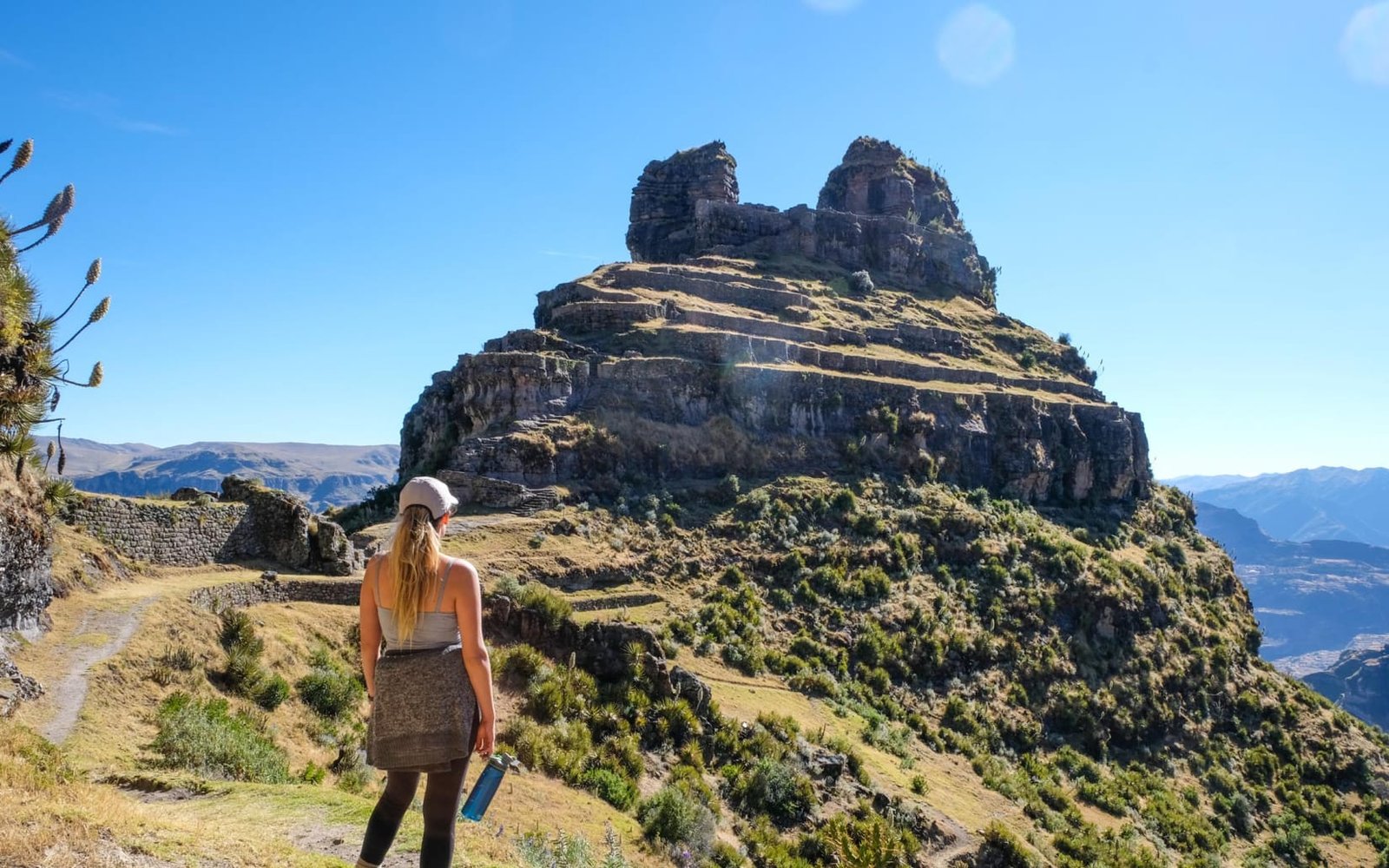
Waqrapukara is an archaeological site in Cusco’s Acomayo province, built around a rocky outcrop above a canyon. A day trip from Cusco combines a road journey, a high-altitude hike and time at the ruins. The first thing to confirm is the trailhead: more than one walking route leads to the site, so two trips with the same destination can feel quite different.
The Ministry of Foreign Trade and Tourism documents the site in the Acos district of Acomayo. Its name combines the Quechua words for horn and fortress, an apt description for the paired rock formations that frame the upper complex. The inventory records terraces and masonry fitted around the sandstone outcrop, including niches and doorways that are easy to overlook if you stop at the first photo spot. MINCETUR archaeological inventory.
PROMPERÚ describes an approach via Sangarará and lists other access routes through Wayki, Santa Lucía and Campi. Ask for the actual vehicle drop-off point, the expected walking distance and elevation change in each direction, and whether you will return by the same path. A route described by the nearest town may start well beyond the town center. PROMPERÚ practical guide to Cusco.
| If you care most about | Confirm before choosing |
|---|---|
| Keeping the walk manageable | Walking distance, elevation change and the steepest section |
| Spending time at the ruins | How much time the plan leaves for the archaeological visit |
| Photographing the canyon | Which viewpoints the route reaches and when |
| Avoiding surprises on the return | Whether you retrace the trail and where the vehicle meets you |
MINCETUR records the archaeological site at around 4,300 metres. Consider altitude alongside trail distance and gradient when comparing itineraries. Ask your guide how the group handles breaks and where you can turn back if you decide to shorten the day. Conditions can also change after rain, so confirm the route close to your visit.
Plan footwear for uneven ground, carry water and pack layers for wind or rain. Ask whether there is somewhere to refill water and what food the itinerary includes. Leave room in your schedule to adjust the day if visibility or trail conditions change.
Start from a wider viewpoint to see how the terraces wrap around the rock. As you get closer, look for the way stone walls follow the contours and how the openings frame different parts of the landscape. Allow time for a guide to explain the architecture and what can be established about the site’s use. Stay on authorized paths and avoid climbing walls or approaching exposed edges for a photograph.
Give Waqrapukara its own day if the hike and the ruins are the main reasons you want to go. A full day leaves room for road travel and breaks without turning the visit into a short stop. If you are choosing between hikes, our Huchuy Qosqo guide covers a different archaeological walk. If you want a day organized around towns and shorter visits, see our guide to planning one or two days in the Sacred Valley.
Review the Waqrapukara trek and fortress tour for a sample day from Cusco. Ask the team to confirm your trailhead, walking profile, inclusions and expected return for your date. If the itinerary mentions an extra stop, check how much time remains at Waqrapukara itself.
Published by Meta Peru Travel.