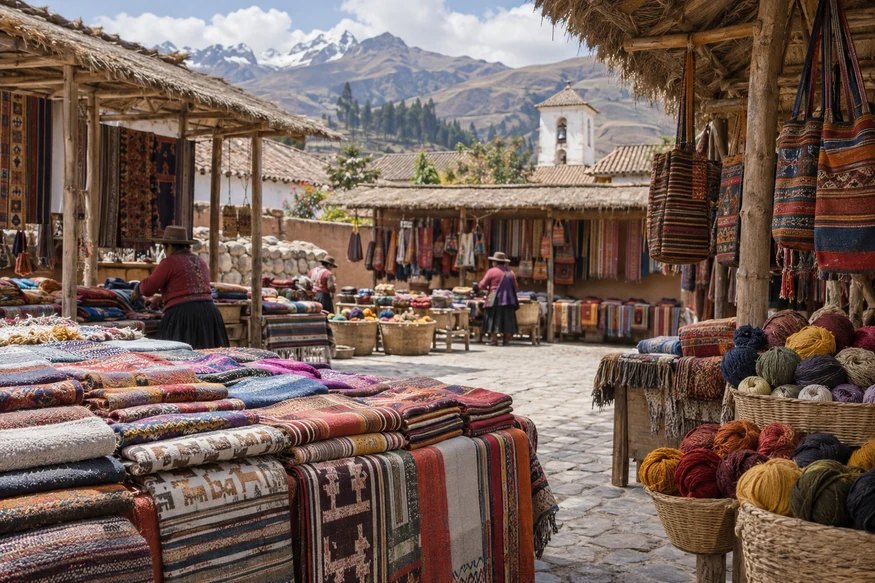
Chinchero Market is one of the best places near Cusco to learn about Andean weaving and buy textiles directly from local artisans. Its appeal comes from the connection between the market, surrounding Quechua communities and workshops where wool is washed, spun, dyed and woven using knowledge passed between generations.
This shopping-focused guide explains the best days to visit Chinchero Market, what to buy, how to identify quality textiles, whether bargaining is appropriate and how much time to allow.
Chinchero is famous for textiles made with Andean fibers, traditional designs and a wide range of dyeing and weaving techniques. Visitors can find table runners, belts, bags, scarves, blankets and decorative pieces.
The broader market may also include food and everyday products, particularly on traditional market days. The visitor experience varies between the town market and individual textile centers.
Sunday is traditionally the largest and most active market day. It offers the strongest mixture of local commerce and artisan stalls, but it can also be busier.
Textile cooperatives and workshops often receive visitors on other days, making a weekday suitable for travelers who prefer a quieter demonstration. Schedules can change around festivals and community events, so confirm locally.
Morning is usually the best choice. Vendors and workshops are active, temperatures are manageable and there is enough time to continue toward Moray or Maras.
Arriving early on Sunday helps avoid the largest tour groups. Late visits can be quieter, but some market activity may already be winding down.
Chinchero is roughly 45 to 60 minutes from Cusco by private vehicle under normal conditions. Shared transport also serves the route, although departure points and return arrangements should be checked in Cusco.
For a coordinated day, combine the market with a Chinchero, Maras and Moray tour. Read the broader Chinchero visitor guide for archaeological tickets and altitude information.
These pieces display weaving structure clearly and are relatively easy to transport. Ask whether the item was woven by hand and which fiber was used.
Smaller pieces can offer detailed patterns at a more accessible price. Inspect edges, seams, fasteners and finishing.
Not every soft item is pure alpaca. Ask specific questions about fiber content and avoid assuming that price or softness alone proves authenticity.
Some workshops sell yarn or samples that illustrate local dyeing methods. Check customs rules before carrying untreated natural materials internationally.
Look for consistent tension, secure edges, detailed pattern work and a clear explanation of the maker and materials. Small variations can be evidence of handwork, while perfect repetition may indicate machine production.
Turn the textile over and examine the back. Ask how long it took to make, whether a backstrap loom was used and where the artisan lives. Reliable sellers can usually describe the process without vague claims.
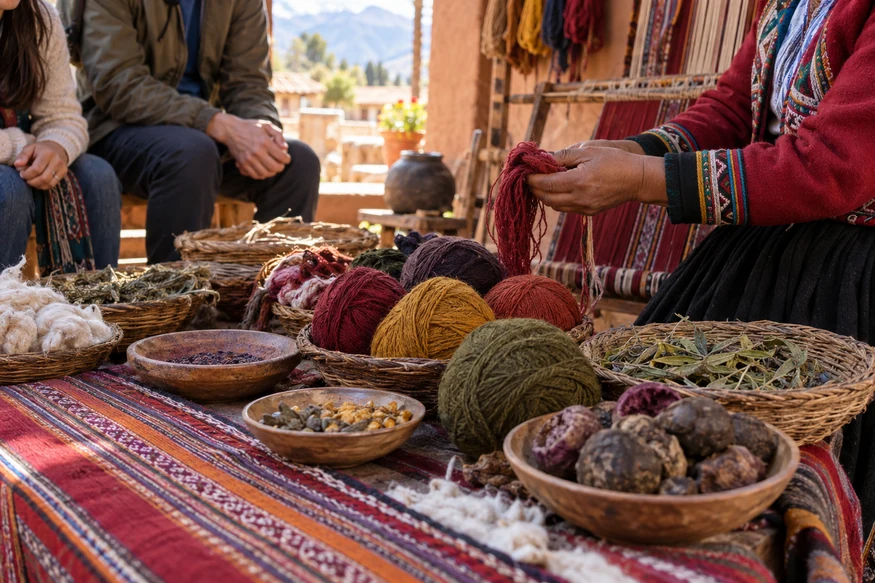
Artisans may demonstrate colors produced from plants, minerals and insects such as cochineal. Dye results depend on material preparation, mordants, water and technique.
A demonstration is most meaningful when the artisan explains the complete process rather than presenting a quick color change. Natural dye does not automatically mean that every item in a shop uses only natural ingredients, so ask before purchasing.
Polite negotiation may be accepted at some stalls, especially for multiple items, but handmade textiles represent many hours of skilled work. Aggressive bargaining can undervalue both labor and materials.
Ask the price respectfully, make a reasonable offer if appropriate and accept the response. Cooperatives and established workshops may use fixed prices.
Carry Peruvian soles in small denominations. Some larger workshops may accept cards, but internet connectivity and payment fees can make cash more dependable.
Keep money secure and ask for a receipt for higher-value purchases. Do not display all your cash while negotiating.
| Feature | Chinchero Market | Pisac Market |
|---|---|---|
| Signature experience | Textile techniques and demonstrations | Broader artisan and town market |
| Traditional main day | Sunday | Sunday, with activity during the week |
| Easy pairing | Moray and Maras | Pisac archaeological site |
| Best for | Understanding weaving and dyes | Variety of crafts and shopping |
Neither market is universally better. Choose Chinchero for textile interpretation and Pisac Market for a larger variety of stalls and an easy pairing with Pisac ruins.
Yes. The historic center, church, archaeological terraces and market can fit into the same visit. Allow two to three hours for the full experience rather than treating the market as an isolated shopping stop.
The archaeological area normally requires the relevant Cusco Tourist Ticket, while entering the shopping area itself does not use that ticket.
Ask before photographing an artisan, especially during a demonstration. A purchase does not automatically grant permission for portraits or video.
Whenever possible, buy from makers or transparent cooperatives, request accurate material information and pay a fair price. Avoid products that appear to contain archaeological material or protected wildlife.
Sunday is the traditional principal market day, while many workshops and cooperatives receive visitors on additional days. Confirm current local schedules.
The shopping areas do not normally require an admission ticket. The nearby archaeological site uses the Cusco Tourist Ticket.
No. Markets can contain both handmade and machine-produced goods. Ask detailed questions and inspect construction before buying.
For the next steps, explore Sacred Valley Luxury Travel Guide: Best Places, Hotels and Private Experiences.
Published by Meta Peru Travel.