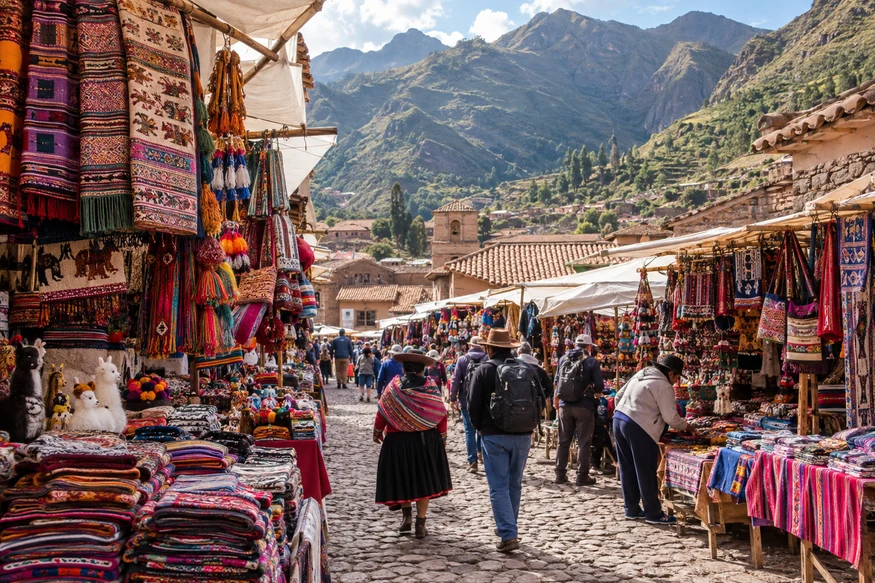
Pisac Market is one of the best-known traditional and artisan markets in Peru's Sacred Valley. Set around the streets and plaza of Pisac town, it brings together woven textiles, ceramics, silverwork, food products and everyday local commerce. A good visit is not only about shopping: it also offers a practical introduction to the valley's craft traditions.
This guide explains the best days to visit Pisac Market, what to buy, how bargaining works and how to combine the market with Pisac ruins without rushing either experience.
Pisac Market is a combination of artisan stalls and traditional local commerce. Tourism has expanded the craft section, but agricultural products, food and community exchange remain part of the town's market identity.
Stalls spread beyond a single building, and their number varies by day. Expect a busier atmosphere on principal market days and a calmer shopping experience at other times.
Artisan stalls commonly operate throughout the week, while Sunday is traditionally the largest and liveliest market day. Tuesday and Thursday are also often associated with expanded market activity. Local patterns can change around festivals, elections and road disruptions.
If the traditional atmosphere matters more than avoiding crowds, choose Sunday morning. If you prefer easier conversations with vendors and a less compressed schedule, a weekday can be more comfortable.
Morning is generally best. Stalls are fully active, temperatures are comfortable and visitors can continue to the ruins or another Sacred Valley stop after shopping.
Arriving before the largest tour groups provides more space. Late afternoon may be quieter, but some vendors begin packing and the selection can be smaller.
Pisac lies roughly 33 kilometers northeast of Cusco. Private transport usually takes around one hour, depending on traffic and stops. Shared transport reaches Pisac town, but departure points and schedules should be checked locally.
A private route is useful when combining the market with the upper entrance to the ruins. Meta Peru Travel's City Tour and Pisac Full Day coordinates the archaeological sites and transport.
Look for belts, table runners, bags and clothing made with recognizable weaving techniques. Ask about fiber, dyes, place of origin and whether the piece was woven by hand or machine.
Bowls, decorative pieces and traditional motifs are widely available. Inspect fragile items carefully and consider how they will be protected during travel.
Designs often incorporate Andean symbols and stones. For higher-value purchases, ask about metal purity, workmanship and a receipt.
Packaged Maras salt, herbs and local ingredients can make practical gifts. Check customs rules for food products before flying internationally.
Authenticity is not determined by bright color or a vendor's claim alone. Handwoven pieces usually show small variations, tighter finishing and more complex work than mass-produced items. Natural fibers also feel different from acrylic.
Ask respectful, specific questions: who made it, where it was woven, which fiber was used and how long it took. A trustworthy seller should be able to explain the product without creating pressure.
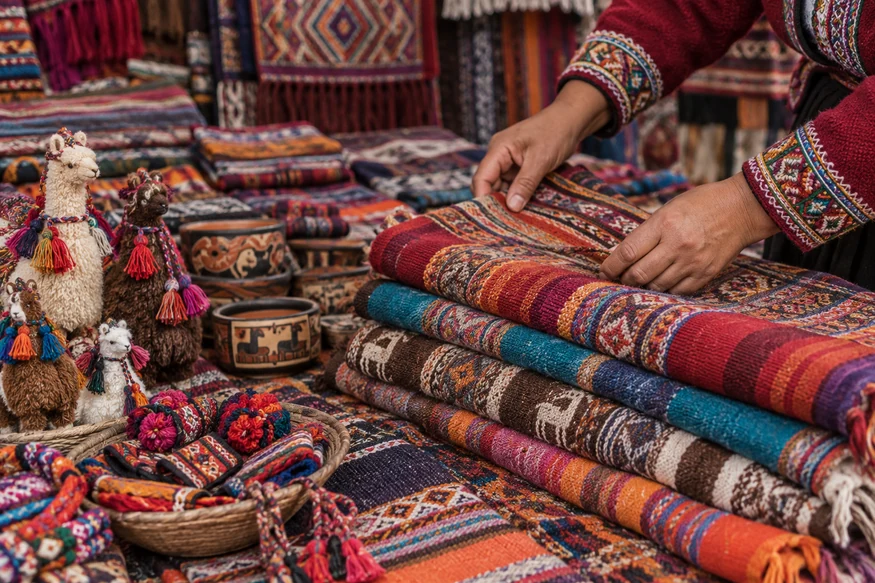
Polite negotiation is common for some souvenir purchases, especially when buying several items. It should not become aggressive. Handmade work represents time, materials and specialized knowledge.
Ask the price, make a reasonable counteroffer and accept the answer gracefully. Fixed-price shops and cooperatives may not negotiate.
Carry Peruvian soles in smaller denominations. Some established shops may accept cards or digital payments, but connectivity and fees can make cash more reliable.
Keep money secure and avoid displaying a large amount. Use authorized cash machines in established areas rather than depending on finding change at every stall.
| Feature | Pisac Market | Chinchero Market |
|---|---|---|
| Experience | Large artisan and town market | Strong textile-demonstration focus |
| Easy pairing | Pisac ruins | Chinchero, Moray and Maras |
| Time needed | 1–2 hours | About 1 hour |
| Best for | Broad selection | Learning about weaving and dyes |
Yes. Visit the ruins first in the cooler morning, then descend to town for the market and lunch. Allow two to three hours for the archaeological park and another one to two hours for the market.
Do not confuse their entrances: the market is in town, while the principal vehicle entrance to the ruins is higher on the mountain.
Buy directly from artisans when possible, ask before photographing people and avoid purchasing archaeological objects, wildlife products or items whose export may be restricted. Paying a fair price helps preserve skilled local work.
A meaningful purchase is one whose maker, material and use you understand—not simply the cheapest object on the street.
Artisan stalls commonly operate through the week, with a larger traditional market atmosphere on principal days such as Sunday.
Yes. The market itself does not require the Cusco Tourist Ticket; Pisac archaeological park does.
It is best known for Andean textiles, ceramics, jewelry, crafts and its setting in a traditional Sacred Valley town.