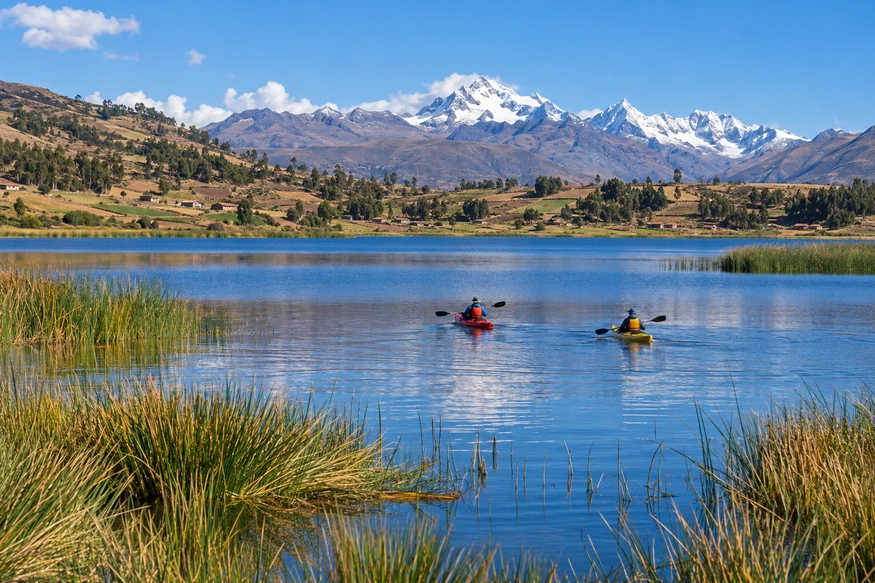
Huaypo Lagoon is a high-Andean lake northwest of Cusco, set between the agricultural landscapes of Chinchero and Anta. Its open water, mountain views, wetlands and birdlife make it a valuable nature stop for travelers who want to complement the archaeological highlights of the Sacred Valley.
Huaypo Lagoon—also called Lake Huaypo or Laguna de Huaypo—is a natural body of water in the Cusco region. Peru's official tourism inventory describes a lake approximately 1.5 kilometers long and 800 meters wide, surrounded by farmland, seasonal vegetation and wetland habitat.
The lagoon is not a monumental attraction with a fixed circuit. Its value comes from the landscape, local recreation and the chance to slow down between busier Sacred Valley stops.
Huaypo lies northwest of Cusco between the areas of Anta and Chinchero. The final approach follows local roads rather than the principal tourism highway, so the exact access point should be confirmed before departure.
Because map applications can show several shoreline pins, arrange the meeting point with the activity provider or driver instead of navigating only to the name of the lake.
Yes for travelers interested in open scenery, water activities, photography or birdwatching. Visitors with only one Sacred Valley day should normally prioritize major sites first; Huaypo is most useful as an additional nature experience or a relaxed stop in a private itinerary.
Kayaking and stand-up paddle are among the recreational activities promoted at Huaypo. Conditions, operators and equipment availability can change, so reserve through an authorized provider and confirm that a life jacket, safety briefing and suitable support are included.
Do not enter the water during storms, strong wind or when the local operator advises against it. High-altitude sun and cold water make appropriate clothing important even on a clear day.
The official tourism inventory records more than one hundred resident and migratory bird species around the lagoon, including ducks, herons, hummingbirds and birds of prey. Totora reeds and seasonal shoreline habitat are especially important for wildlife.
Use binoculars or a telephoto lens rather than approaching nesting or feeding areas. Keep noise low, stay on authorized shoreline access and never leave food or plastic behind.
The current official inventory lists free access and a recommended visiting window of 7:00 a.m. to 3:00 p.m. Local activity providers may operate on different schedules, and access can change because of weather, community decisions or conservation work.
Confirm the latest conditions on the day of travel rather than treating online hours as a guaranteed admission schedule.
Private transportation is the simplest option because it allows a confirmed shoreline access point and a flexible return. Independent transport may require local connections that change, particularly outside peak travel periods.
Huaypo can be planned as a custom addition to Meta Peru's Sacred Valley tour with Maras and Moray. Ask whether the extra driving and activity time fit the day before adding the lake.
The most logical nearby combination links Huaypo with Moray, the Maras Salt Mines and Chinchero. Each stop serves a different intent: natural landscape, Inca agricultural experimentation, salt production and Andean cultural history.
A private itinerary should limit the number of stops. Trying to kayak and complete every major Sacred Valley attraction in one day usually creates more driving than meaningful visiting.
| Factor | Huaypo Lagoon | Piuray Lagoon |
|---|---|---|
| Setting | Anta–Chinchero agricultural landscape | Closer to Chinchero |
| Common activities | Kayaking, paddle and birdwatching | Water activities and landscape visits |
| Best itinerary fit | Moray and Maras route | Chinchero-focused route |
| Planning need | Confirm the operator, access point and weather before departure | |
The better option depends on the day's confirmed route rather than on a simple ranking of the two lakes.
The dry season generally offers more predictable road and water conditions, while the wet season creates greener landscapes and a greater chance of rain or storm delays. Morning visits often have calmer conditions, but the local operator's assessment is more important than a general seasonal rule.
Huaypo sits at about 3,460 meters above sea level. Acclimatize before strenuous activity, use sun protection and bring a warm waterproof layer. Stop the activity and inform the guide if you develop persistent headache, nausea, dizziness or unusual shortness of breath.
Huaypo is both an ecosystem and a resource for surrounding communities. Use authorized services, avoid reeds and wildlife habitat, carry all waste out and do not use soaps or chemicals in the water. Follow community signage and never cross farmland without permission.
Yes, when an authorized provider is operating and conditions are safe. Reserve equipment and safety support in advance.
The current official tourism inventory lists free access, but activity fees and local arrangements are separate and may change.
Allow two to four hours for a relaxed visit or organized water activity, excluding transport and nearby attractions.