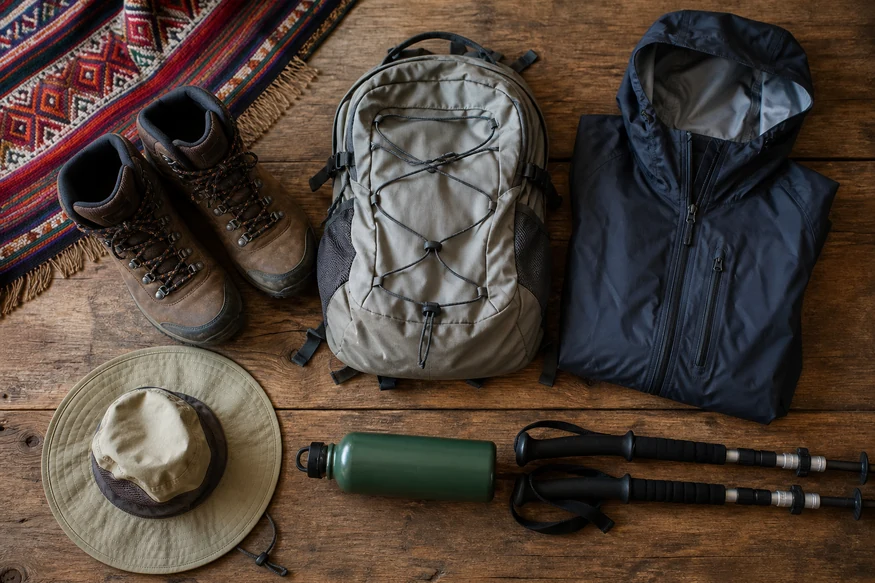
A practical Inca Trail packing list should prepare you for high-altitude sun, cold mornings, rain and several days of walking without making your backpack unnecessarily heavy.
The goal is not to pack everything you own. Instead, choose lightweight and versatile equipment that works in changing mountain conditions.
Footwear is one of the most important decisions for the Inca Trail.
Your shoes should provide good traction on stone, dirt and potentially wet surfaces.
Most importantly, wear them before arriving in Peru. The Inca Trail is not the right place to break in a completely new pair of boots.
Traditional hiking boots are not mandatory for every traveler.
Some hikers prefer boots for ankle support, while experienced trekkers may be comfortable using quality trail shoes.
Your choice should depend on comfort, experience and expected weather conditions.
Your daypack only needs to carry the items you require while walking.
Avoid choosing an oversized backpack that encourages unnecessary packing.
Bring reliable rain protection even during the dry season.
Mountain weather can change unexpectedly, and wet conditions can develop quickly.
A lightweight waterproof shell is generally more versatile than a very heavy jacket.
A backpack rain cover can help, but important electronics and clothing can also be stored inside waterproof bags.
This provides additional protection if you experience sustained rain.
Layering allows you to adapt as temperatures change during the day.
You may begin the morning wearing several layers and remove them gradually as temperatures rise.
UV exposure is stronger at high elevation.
Learn more about the elevations involved in our Inca Trail altitude guide.
Mountain mornings and evenings can become cold, especially during the dry-season winter months.
A warm fleece, lightweight insulating layer and hat can make camps considerably more comfortable.
Trekking poles are optional but can provide additional stability during steep climbs and long descents.
They can be particularly helpful for travelers concerned about knee strain.
A headlamp is useful around camp and during early departures.
Bring spare batteries or a reliable charging solution.
Bring a reusable bottle or hydration system that you can access easily while hiking.
Your trekking company should explain how drinking water is provided during the route.
Carry any medication you regularly need in your daypack rather than placing it somewhere inaccessible.
Bring only the equipment you realistically expect to use.
Charging opportunities can be limited during the trek, so a portable power bank may be useful.
Bring the identification required for your reservation and trail access.
The details provided during booking should match the document you travel with.
Review our Inca Trail permits guide before confirming your trek.
Avoid carrying excessive duplicate clothing, unnecessary electronics or heavy items that provide little practical value.
Extra weight becomes much more noticeable during long uphill sections.
Understanding the Inca Trail difficulty will help you appreciate why packing light matters.
During wetter months, prioritize waterproof protection, quick-drying clothing and reliable footwear traction.
Check our guide to the best time to hike the Inca Trail for seasonal conditions.
It depends on your tour's porter arrangements. Confirm what personal equipment you are expected to carry before departure.
Check your tour inclusions. Sleeping bags may be included, available for rent or treated as optional equipment.
Yes. Rain is less common during the dry season but remains possible in the Andes.
Trail footwear generally provides better traction and support than standard urban sneakers.
The best Inca Trail packing list focuses on practical equipment that can handle changing conditions while keeping your daypack comfortable.