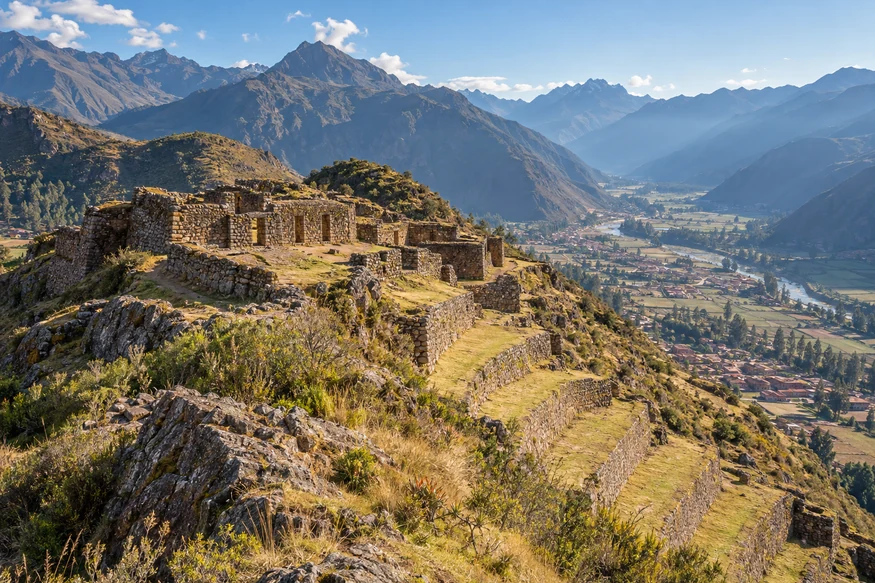
Pumamarca Ruins are a quiet Inca hilltop complex above the Patacancha Valley near Ollantaytambo. Stone enclosures, terraces and mountain views make the site an excellent option for travelers who want archaeology and hiking without the crowds found at the Sacred Valley's principal monuments.
Pumamarca is an Inca archaeological complex built on a strategic ridge above the valleys northeast of Ollantaytambo. The surviving walls, courtyards, terraces and defensive-looking position suggest that the site helped control movement through the surrounding mountain routes.
Interpretations of individual buildings vary, so visitors should avoid treating every enclosure as having one certain purpose. A qualified guide can connect the architecture with the wider history of the region.
The ruins stand above the Patacancha Valley in the Ollantaytambo district of Cusco. They are separate from the famous Ollantaytambo ruins and require their own transport and walking plan.
The nearest practical base is Ollantaytambo town, where travelers can arrange a guide, vehicle and return logistics.
Most visitors combine a vehicle transfer into the Patacancha Valley with a hike to or from the ruins. Routes differ in starting point, length and elevation change, so confirm the exact plan before departure.
Do not rely on a generic map pin alone. Rural road conditions, community access and trail junctions can change, especially during the rainy season.
The hike is generally moderate, but altitude, sun exposure and uneven terrain can make it more demanding. A route that descends toward Ollantaytambo differs substantially from an out-and-back ascent from the valley.
Acclimatize before hiking, walk at a sustainable pace and communicate any altitude symptoms to your guide.
A visit can take half a day or most of a day depending on transport, the chosen trail and time spent at the site. Ask for distance, expected walking hours and elevation profile rather than accepting a duration without route details.
The walls and rooms follow the ridge and reveal the scale of the settlement. Stay on established paths and never climb masonry.
Terraces connect the site with the cultivated landscapes of the Patacancha Valley and demonstrate how steep terrain was organized.
The elevated position provides wide views toward Andean peaks, villages and fields. Weather can change quickly, so carry layers even on a clear morning.
Access arrangements can change and may involve local community rules rather than the standard Cusco Tourist Ticket. Confirm current fees and permissions with a qualified local operator shortly before visiting.
A guide is strongly recommended for route finding, historical context and coordination with local communities. The trail is quieter than major tourist circuits, and mobile coverage should not be assumed.
The dry season generally provides more stable trails and clearer mountain views. The rainy season brings greener scenery but also mud, reduced visibility and possible road disruptions.
Start early for cooler hiking conditions and more time to respond to weather changes.
| Factor | Pumamarca | Ollantaytambo |
|---|---|---|
| Access | Vehicle plus hiking | Directly from town |
| Crowds | Usually quieter | Major visitor site |
| Best for | Hiking and remote archaeology | Monumental architecture and easy access |
| Time needed | Half day or longer | About 2–3 hours |
Stay overnight in Ollantaytambo and dedicate a separate morning or half day to Pumamarca. Avoid placing the hike immediately before a tightly timed train departure.
Use our Sacred Valley travel guide to coordinate Pisac, Maras, Moray and Ollantaytambo without excessive backtracking.
Stay on established trails, carry all waste out and follow community instructions. Ask before photographing residents, livestock or private homes, and use local guiding and transport services where practical.
Yes for acclimatized travelers who enjoy hiking, archaeology and quieter landscapes near Ollantaytambo.
Many active beginners can complete an appropriate route with acclimatization and a guide, but the terrain and altitude should not be underestimated.
Yes with an early start and planned transport, although separating the hike from the main ruins provides a more relaxed experience.