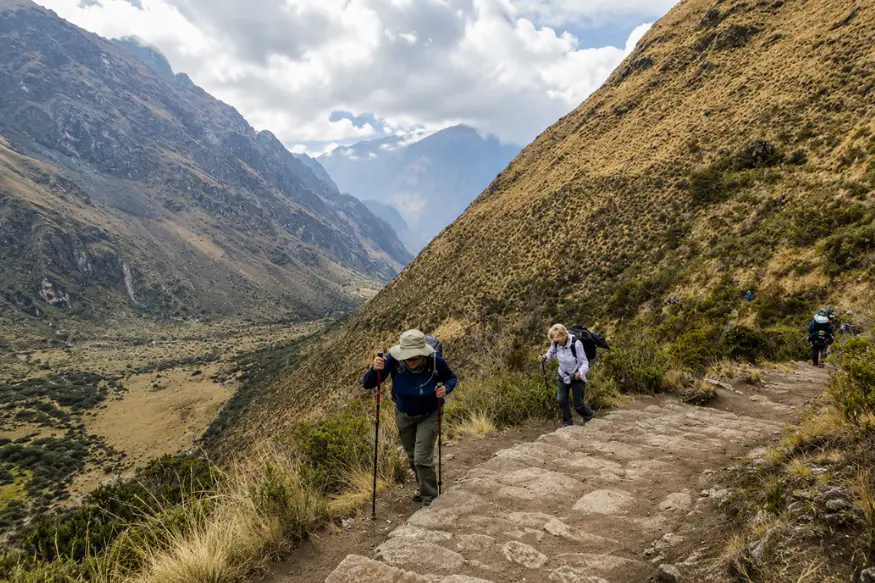
December is one of the greenest times of the year to hike the Inca Trail. The mountains and valleys are lush, temperatures are relatively mild, and the cloud forest near Machu Picchu is full of vegetation.
The main thing to consider is rain. December falls within the wet season in the Andes, so you should be prepared for showers, wet stone steps, and changing visibility along the route.
If you don't mind hiking in some rain, December can still be a rewarding time to experience the Inca Trail.
Yes, but December is better suited to travelers who are comfortable with unpredictable weather.
You won't have the same chance of consistently dry conditions as you would from May through September. In return, you'll experience greener landscapes, milder nights, and generally fewer peak-season trekkers on the trail.
December is less about perfect weather and more about being prepared for whatever the mountains bring.
December is part of the rainy season around Cusco and Machu Picchu. That doesn't necessarily mean rain from morning to night, but showers are much more common than in October or early November.
Mornings can still bring sunshine and clear mountain views, while clouds and rain often develop later in the day.
| December Weather | What to Expect |
|---|---|
| Mornings | Often the best chance of clearer weather |
| Afternoons | More clouds and frequent showers |
| Rain | Common |
| Daytime | Mild and comfortable between showers |
| Nights | Cool at higher camps |
| Landscape | Very green and lush |
| Trail | Wet, slippery, or muddy in some sections |
Don't let a sunny morning tempt you into packing your rain jacket away. Weather can change quickly once you're higher in the mountains.
Rain is common in December, but conditions vary from day to day. You may have a short afternoon shower, several hours of rain, or a mostly dry trekking day.
The important difference from the dry season is that you should expect rain rather than treat it as an exception.
Good waterproof gear makes a big difference. A waterproof jacket, backpack cover, and dry bags for clothing and electronics should always be easy to reach.
December is not usually extremely cold during the day. In fact, temperatures can feel quite comfortable while hiking, particularly at lower elevations.
The higher camps and mountain passes are cooler, especially when clouds, wind, and rain arrive.
| Conditions | Typical December Range |
| Daytime | Around 15–20°C / 59–68°F |
| Nighttime | Around 5–8°C / 41–46°F |
| Highest point | 4,215 m / 13,829 ft |
| Rain possibility | High |
| Humidity | High near Machu Picchu |
| Overall conditions | Mild, wet, and changeable |
Layers work much better than relying on one heavy jacket. You'll often warm up quickly during climbs and cool down just as quickly when you stop or when rain moves in.
December scenery is completely different from the golden landscapes of the dry season.
Regular rainfall brings the mountains back to life. Grasslands become greener, vegetation thickens, streams carry more water, and the cloud forest becomes especially lush.
| Along the Trail | What You'll See in December |
| High Andes | Green mountain slopes and grasslands |
| Mountain views | Clear periods mixed with clouds and mist |
| Archaeological sites | Ruins surrounded by fresh vegetation |
| Cloud forest | Dense, green, and humid |
| Wiñay Wayna | Lush terraces surrounded by vegetation |
| Near Machu Picchu | Green and tropical mountain scenery |
Clouds may occasionally hide some of the wider mountain views, but they can also create dramatic scenery around places such as Sayacmarca, Phuyupatamarca, and Wiñay Wayna.
December is generally quieter on the Inca Trail than the peak months of June, July, and August, but there is one important exception: the Christmas and New Year period.
Travel demand around Peru can increase during the holidays, so late December should not automatically be treated as low season.
Inca Trail permits are also limited regardless of the month. If you already know your travel dates, booking ahead remains the safest option.
Permits are issued for a specific traveler and departure date. Once the spaces for a particular date are gone, tour operators cannot simply add additional permits.
The main challenges of the Inca Trail remain the same throughout the year: altitude, steep climbs, long descents, and thousands of stone steps.
December adds wet conditions to that list.
| Inca Trail Difficulty | What to Expect |
| Distance | Around 42 km / 26 miles |
| Highest point | 4,215 m / 13,829 ft |
| Hardest day | Usually Day 2 |
| Main challenge | Altitude and steep climbs |
| December challenge | Rain, mud, and slippery stone |
| Difficulty | Moderate to challenging |
Day 2 is usually the most demanding because you climb to Dead Woman's Pass (Warmiwañusca) at 4,215 meters (13,829 ft).
Rain can make the long stone descents more tiring, so hiking shoes with good traction and trekking poles are particularly useful in December.
Altitude deserves just as much attention as the weather.
Cusco sits at approximately 3,400 meters (11,150 ft), and the Inca Trail climbs above 4,200 meters.
Try to spend at least 2–3 days in Cusco or the Sacred Valley before beginning the trek. You don't need to spend those days doing difficult hikes; the goal is simply to give your body time to adjust.
Rest well, drink enough water, eat normally, and avoid excessive alcohol during your first days at altitude.
The Inca Trail remains hikeable in December, but wet conditions can make some sections more demanding.
Original stone staircases become slippery after rain, while dirt sections can turn muddy. You may also encounter puddles and reduced visibility around the higher passes.
| Trail Section | December Conditions |
| Stone paths | Slippery when wet |
| Dirt sections | Mud is common after rain. |
| Mountain passes | Clouds and mist are possible. |
| Long descents | Extra care needed |
| Cloud forest | Very green and humid |
Take your time on wet descents. Trying to maintain the same pace you would on a dry trail isn't worth the risk of slipping.
December gives Machu Picchu a particularly green setting. The surrounding mountains are covered in vegetation, but clouds and mist are also more common than during the dry season.
You may reach the Sun Gate and immediately see Machu Picchu below, or you may have to wait for clouds to move through the valley.
A cloudy arrival doesn't necessarily mean the view is lost for the day. Conditions around Machu Picchu can change quickly.
For a closer look at rainfall, visibility, crowds, and visiting conditions at the citadel, read our Machu Picchu in December guide.
Rain protection should be one of your priorities when packing for December.
| What to Bring | Why You'll Need It |
| Waterproof jacket | Essential during rainy season |
| Rain pants | Useful during longer showers |
| Backpack rain cover | Helps keep your equipment dry |
| Waterproof hiking shoes | Better protection on wet trails |
| Trekking poles | Extra stability on slippery descents |
| Quick-dry clothing | Easier to manage in wet conditions |
| Warm layer | Needed at higher camps |
| Sun protection | UV exposure remains strong at altitude. |
| Headlamp | Essential around camp |
| Dry bags | Protect clothing, documents, and electronics. |
Don't rely entirely on your backpack cover. Keep important items inside waterproof bags as an extra layer of protection.
For a complete equipment checklist, see our Inca Trail Packing List.
December has some clear advantages, but you need to be comfortable with wet weather to enjoy them.
| Advantages | Disadvantages |
| Very green landscapes | Frequent rain |
| Lush cloud forest | Slippery stone steps |
| Milder nighttime temperatures | Muddy sections |
| Fewer peak-season trekkers | More cloud cover |
| Beautiful vegetation | Mountain views can be obscured. |
| Dramatic photography conditions | Waterproof equipment is essential |
If you value lush scenery and don't mind hiking in rain, December can be very rewarding. If clear skies are your main priority, another month will probably suit you better.
December requires more preparation than the dry-season months, but the historic route to Machu Picchu remains an extraordinary experience.
Our Classic Inca Trail 4 Days follows original Inca pathways through mountain passes, archaeological sites, and cloud forest before reaching Machu Picchu through the Sun Gate.
Explore the complete itinerary, inclusions, and available departures when you're ready to plan your trek.
Yes, if you're comfortable hiking in wet conditions. December offers lush scenery and milder temperatures, but rain is much more common than during the dry season.
Rain is common, but it doesn't necessarily rain continuously every day. Conditions can change between sunshine, clouds, mist, and showers throughout the trek.
Early December is generally preferable if weather is your priority. Late December moves further into the rainy season and also coincides with increased holiday travel.
Yes. The Classic Inca Trail normally remains open throughout December. Its regular annual maintenance closure takes place in February.
Yes, clear views are possible, but clouds and mist are more common. Visibility can change quickly, particularly in the morning.
November generally offers a better balance between rainfall and green scenery. December is wetter but also noticeably lush. If minimizing rain is your priority, November is usually the better choice.
Yes, but December isn't for everyone.
If your idea of the perfect Inca Trail means several consecutive days of blue skies and dry stone paths, you should consider traveling during the dry season instead.
If you're comfortable hiking through occasional rain, December has plenty to offer. The mountains are intensely green, vegetation surrounds the archaeological sites, and clouds moving through the valleys can completely change the atmosphere of the trail.
The key is preparation. Bring reliable waterproof gear, arrive properly acclimatized, and expect the weather to change.
Do that, and December can still be a memorable time to hike the Inca Trail to Machu Picchu.