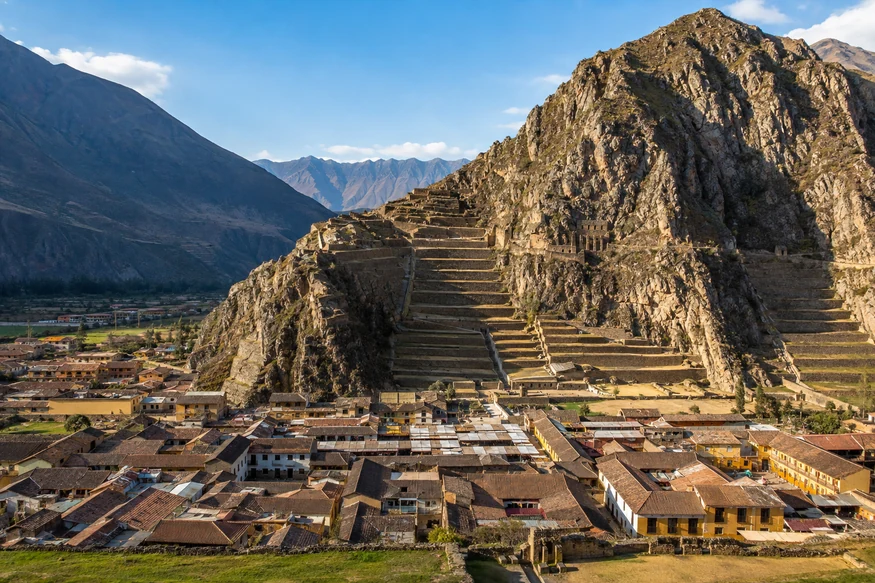
The Ollantaytambo ruins are one of the most important Inca archaeological sites in Peru's Sacred Valley. Built across a steep mountainside above a living Inca town, the complex combines monumental terraces, ceremonial architecture, water channels and unfinished stonework that reveals how the Incas planned and moved enormous blocks.
This visitor guide explains how to reach Ollantaytambo, which ticket you need, how long the visit takes and what to see. It is designed for travelers planning the ruins independently or combining them with a Sacred Valley tour and the train to Machu Picchu.
Ollantaytambo was an Inca royal estate, religious center, agricultural complex and strategic stronghold. Its position controlled movement through the western Sacred Valley and toward the routes that continue into the cloud forest.
The site is especially significant because Manco Inca's forces resisted Spanish troops here in 1537. The archaeological complex was never fully completed, and the unfinished areas help visitors understand Inca quarrying, transport and construction methods.
The entrance is at the northern edge of Ollantaytambo town, approximately 60 kilometers northwest of Cusco. The archaeological terraces rise directly behind the historic streets, so travelers staying in town can normally walk to the entrance.
Ollantaytambo also has a major railway station for services toward Machu Picchu. The ruins and railway station are separate: allow enough time to leave the site, collect luggage and reach the platform without rushing.
A private vehicle is the simplest option and normally takes around two hours, depending on traffic and stops. The Chinchero route is common, while the Pisac–Urubamba route is longer but can form part of a wider Sacred Valley visit.
Shared vans are available from Cusco, but departure points and schedules can change. Travelers carrying luggage or connecting with a train should build in extra time. A guided Sacred Valley tour including Ollantaytambo is the easiest way to combine the ruins with Pisac, Maras and Moray.
Admission is normally covered by the Cusco Tourist Ticket, particularly the Integral Ticket or the Sacred Valley circuit. A separate Machu Picchu ticket does not provide access to Ollantaytambo.
Ticket rules and prices can change. Verify the current circuit, validity and authorized sales points with COSITUC before traveling. Carry the identification document used to purchase your ticket.
Opening hours can change during holidays, maintenance or exceptional conditions, so confirm the current schedule locally. Arriving near opening time generally provides cooler conditions, softer light and fewer large groups.
Late afternoon can also be pleasant after many day tours begin returning to Cusco. However, do not plan a late visit immediately before a fixed train departure. In the rainy season, stone stairs may be slippery and afternoon showers can slow the descent.
Allow around 1.5 to 2.5 hours for the main terraces and ceremonial sector. Fast visitors may see the central route in about an hour, but that leaves little time for explanations, photographs or rest on the climb.
Travelers interested in the town, water channels and viewpoints should reserve half a day. A private guide adds context and helps prioritize the most important sectors without turning the visit into a race.
Broad terraces rise above the entrance and stabilize the slope. Their scale creates the site's dramatic first impression and demonstrates how Inca builders managed steep Andean terrain.
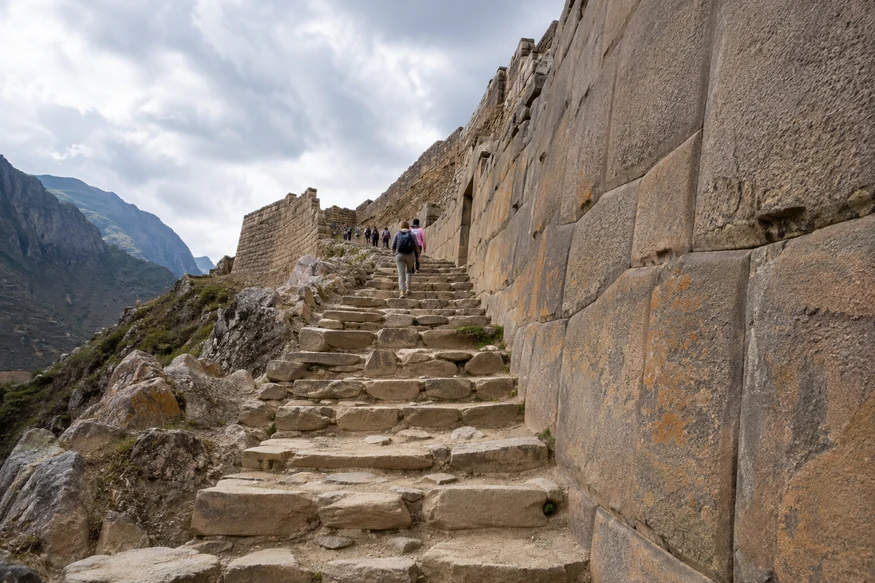
The upper ceremonial sector contains massive pink-granite blocks fitted with extraordinary precision. Unfinished surfaces and nearby stone fragments show that work was interrupted before the complex was completed.
Six enormous upright stones form one of Ollantaytambo's most recognizable structures. Narrow stone spacers separate the monoliths and form part of a sophisticated ceremonial composition.
High on the opposite mountainside, the qullqas used elevation and airflow to preserve food. They are best appreciated from the main complex, although separate paths may require additional time.
Water still flows through channels in the archaeological site and historic town. The system demonstrates careful hydraulic planning rather than serving as decoration alone.
The visit is moderately demanding because the main route climbs long flights of high, uneven stone steps. Ollantaytambo is lower than Cusco, but visitors may still feel the altitude.
Walk slowly, use handrails where available and wear shoes with dependable grip. Travelers with knee, balance or mobility concerns can enjoy the lower terraces and views without completing every upper section.
| Feature | Ollantaytambo | Machu Picchu |
|---|---|---|
| Setting | Above a living Inca town | Remote mountaintop citadel |
| Ticket | Cusco Tourist Ticket circuit | Separate dated and timed ticket |
| Typical visit | 1.5–2.5 hours | Controlled visitor circuit |
| Known for | Terraces, monoliths and military history | Complete urban complex and iconic landscape |
The sites complement each other. Ollantaytambo explains Sacred Valley engineering and remains integrated with a living town; Machu Picchu offers a different urban and landscape experience.
Yes, but only with a realistic schedule. Reserve at least two hours for the ruins, then add time to return to your hotel, collect luggage and travel to the railway station. Train operators require passengers to arrive before departure.
An overnight stay provides the calmest option. Travelers on a coordinated itinerary can combine Ollantaytambo with Meta Peru Travel's Luxury Sacred Valley and Machu Picchu Tour.
For wider planning, read the Sacred Valley luxury travel guide and our companion guide to Pisac ruins.
Yes. They combine monumental architecture, major Inca history and one of the Sacred Valley's most impressive settings.
Yes, provided you have the correct tourist ticket. A guide is valuable because signs alone do not explain every sector.
No. Ollantaytambo is approximately 2,790 meters, while Cusco is around 3,400 meters.
Sales arrangements can change. Confirm current authorized points with COSITUC rather than relying on an old blog or screenshot.