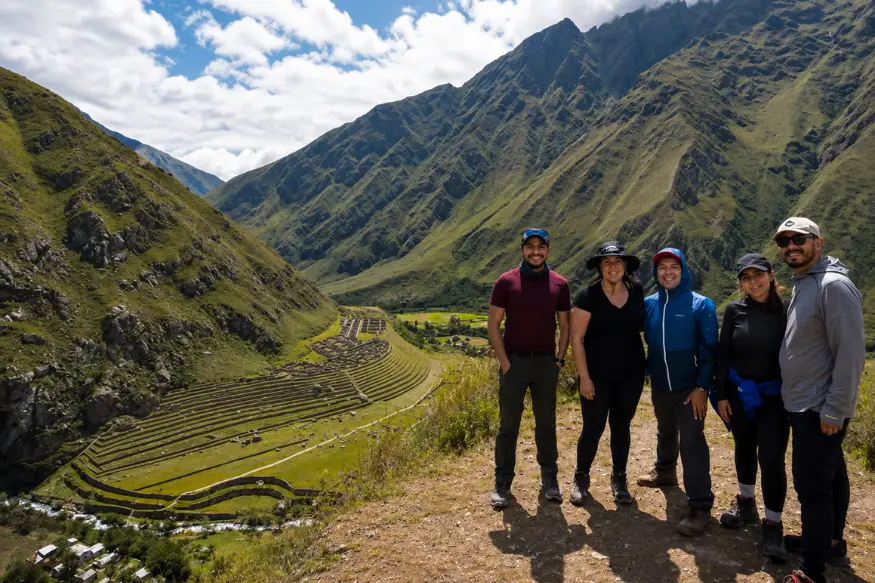
Yes. May is considered one of the best months to hike the Inca Trail to Machu Picchu.
Rainfall generally decreases significantly compared with the wetter months at the beginning of the year, while the landscape remains green from the recent rainy season. Hikers can often enjoy clearer mountain views, better trail conditions, and more opportunities for sunshine.
Travelers planning to hike during this month can also explore our Classic Inca Trail 4 Days tour, which includes permits, professional guides, camping equipment, and all logistics.
May marks the beginning of the drier period in the Cusco region. Days along the Inca Trail are often sunny or partly cloudy, although occasional rain is still possible.
Weather conditions can change considerably throughout the trek because the route crosses different elevations and ecosystems.
During the day, hikers may experience warm sunshine on exposed sections of the trail. Temperatures become noticeably cooler in the evening, especially at higher campsites.
Because of these variations, hikers should prepare for:
Even during the dry season, waterproof equipment should remain part of your packing list.
One of the biggest mistakes travelers make is assuming that the beginning of the dry season means consistently warm weather.
May can provide pleasant temperatures while hiking during the day, but nights can become cold.
The temperature you experience depends heavily on altitude. Lower sections of the trail can feel warm in direct sunlight, while high-altitude campsites may approach freezing temperatures overnight.
A layered clothing system is therefore essential.
A typical hiking outfit might include a lightweight base layer, fleece or insulating layer, and waterproof outer shell. At camp, a warm jacket can make evenings considerably more comfortable.
May is a popular month for hiking the Inca Trail.
As weather conditions improve, demand increases from international travelers planning trekking trips to Peru.
However, the number of people who can enter the regulated Inca Trail is limited by the permit system. This means the trail cannot receive unlimited numbers of independent hikers.
You will still encounter other trekking groups, particularly at campsites, archaeological sites, and popular viewpoints.
Machu Picchu itself may feel busier than remote sections of the trail because visitors also arrive by train from Cusco and the Sacred Valley.
If you prefer quieter moments, hiking at a comfortable but consistent pace can sometimes help create distance between trekking groups.
Securing an Inca Trail permit should be one of your first priorities when planning a May departure.
The Inca Trail operates under a regulated permit system designed to limit the number of people entering the route.
Permits are limited and include not only travelers but also guides, porters, cooks, and other trekking personnel.
Because May is a popular trekking month, permits can sell out well before the departure date.
Travelers cannot simply arrive in Cusco and independently begin the Inca Trail. The trek must be organized through an authorized operator that manages the necessary permits and logistics.
Once permits for a particular date are unavailable, travelers generally need to choose another departure date or consider an alternative trek.
For this reason, booking several months ahead is strongly recommended.
Hiking the Inca Trail in May offers a remarkable mix of high-altitude mountain scenery, archaeological sites, and lush cloud forest. As the rainy season comes to an end, conditions generally become drier, while much of the vegetation along the route remains green from the previous months of rainfall.
The journey changes considerably from one section to another. Hikers begin in the lower Andean valleys, climb toward high mountain passes, and eventually descend into the cloud forest before reaching Machu Picchu. Along the way, several Inca sites provide some of the most memorable highlights of the trek.
Patallacta is one of the first major archaeological sites visible along the Classic Inca Trail. Located at approximately 2,840 meters above sea level, the site features extensive agricultural terraces and stone structures built across the Andean landscape.
In May, the surrounding valleys often retain their green appearance after the rainy season, making this section particularly scenic. Patallacta provides hikers with an early introduction to the sophisticated agricultural systems and settlements found along the historic route to Machu Picchu.
Dead Woman's Pass, or Warmiwañusca, is the highest point of the Inca Trail, reaching approximately 4,215 meters above sea level. The long ascent to the pass is widely considered the most physically demanding section of the trek.
May's generally drier weather can provide better trail conditions for the climb, although altitude remains the main challenge. Temperatures can also drop considerably at this elevation, especially in the early morning and when clouds cover the surrounding mountains.
Runkurakay is a distinctive semicircular archaeological site located high in the Andes at approximately 3,760 meters above sea level. Its strategic position provides impressive views of the surrounding mountains and valleys.
During May, improving weather conditions can offer better visibility across this high-altitude landscape. The site is usually visited while continuing through one of the most mountainous sections of the Inca Trail.
Sayacmarca is dramatically positioned on a mountain ridge at approximately 3,600 meters above sea level. The archaeological complex consists of stone enclosures, narrow passageways, staircases, and ceremonial areas overlooking the surrounding valleys.
May can provide favorable conditions for appreciating the mountain scenery around Sayacmarca. However, clouds and mist are still possible at this elevation and can create a particularly atmospheric setting around the ruins.
Known as the "Town Above the Clouds," Phuyupatamarca is one of the highest and most impressive archaeological sites along the Inca Trail. The complex features agricultural terraces, stone structures, ceremonial baths, and an intricate water system.
As hikers begin descending toward the cloud forest, the landscape becomes increasingly green. In May, the combination of lingering vegetation from the rainy season and improving weather can make this one of the most scenic sections of the trek.
Intipata is an extensive system of agricultural terraces built into a steep mountainside. Its elevated location provides impressive views across the surrounding valleys and mountains.
The terraces can appear particularly striking in May, when vegetation often remains green after the rainy months. This quieter archaeological site is encountered as hikers approach the lower sections of the trail leading toward Wiñay Wayna.
Wiñay Wayna is one of the most spectacular archaeological complexes on the Inca Trail. Built into a steep mountainside, the site features agricultural terraces, stone buildings, stairways, and flowing water channels.
May is an attractive time to experience Wiñay Wayna because the surrounding cloud forest may still be lush while rainfall becomes less frequent. Located only a few kilometers from Machu Picchu, it is one of the final major archaeological highlights of the trek.
Inti Punku, commonly known as the Sun Gate, marks the final approach toward Machu Picchu for hikers completing the Inca Trail. From this elevated point, trekkers can experience their first panoramic view of the famous Inca citadel and the surrounding mountains.
May generally offers improving visibility compared with the wetter months, although morning clouds and mist can still occur. Reaching the Sun Gate after several days of hiking is one of the most anticipated moments of the entire journey.
Machu Picchu is the final destination and defining highlight of the Inca Trail. Arriving on foot after following historic Andean pathways provides a very different experience from reaching the archaeological site directly by train.
In May, the mountains surrounding Machu Picchu often remain green, while the transition toward the dry season can bring increasingly favorable conditions for exploring the site. Early mornings may still be misty, but clearer skies can develop as the day progresses, creating impressive views across the citadel and surrounding peaks.
Packing correctly is particularly important because May combines sunny hiking conditions with potentially cold nights.
Recommended items include:
Avoid bringing unnecessary weight.
The goal is to prepare for changing weather while keeping your personal equipment manageable.
Weather is not the only challenge on the Inca Trail.
Altitude can have a much greater impact on hikers who arrive directly from lower elevations.
The highest point of the Inca Trail is Dead Woman's Pass at approximately 4,215 meters above sea level.
Before beginning the trek, spending at least a couple of days acclimatizing in Cusco or the Sacred Valley is generally a good idea.
During this period:
Being physically fit helps with the hiking, but fitness alone does not prevent altitude-related problems.
May's relatively favorable weather does not make the Inca Trail easy.
The Inca Trail remains a physically demanding multi-day trek involving long ascents, steep stone staircases, high altitude, and extended descents.
However, you do not need to be an elite athlete.
Travelers with good general fitness, proper preparation, and sufficient acclimatization regularly complete the trek successfully.
Training before your trip should ideally include:
Starting your preparation several weeks before departure can make the experience considerably more enjoyable.
Yes, May is an excellent month to combine the Inca Trail with a visit to Machu Picchu.
Improving dry-season weather can increase the possibility of clearer views of the surrounding mountains, while vegetation may still appear green from the previous months of rainfall.
However, weather in the cloud forest remains unpredictable. Mist can appear and disappear quickly around Machu Picchu.
Trekking poles are not mandatory, but they are highly recommended. The Inca Trail includes steep stone steps and long downhill sections, and occasional rain or morning moisture can make some surfaces slippery. Rubber-tipped trekking poles can provide extra stability and reduce pressure on the knees.
It is best to book several months in advance, especially if you have fixed travel dates. Inca Trail permits are limited and popular May departures can sell out early, so confirming availability before booking the rest of your trip is recommended.
Pack for both sunny days and changing mountain weather. Essential items include layered clothing, a waterproof jacket, comfortable hiking boots, sun protection, a warm layer for cold mornings and nights, and a rain cover for your backpack.
Yes. The Inca Trail normally operates throughout May. The annual scheduled closure generally takes place in February for maintenance.
Yes. May is a high-demand period, and popular departure dates can sell out months ahead.
Booking several months in advance is recommended, especially if your travel dates are fixed.
Yes, provided they have an appropriate fitness level, prepare beforehand and allow sufficient time to acclimatize to the altitude.